
Get the Right Deck for Your Home
You’re ready to build a deck. But should you go with one flat level or multiple tiers? The answer depends on your yard, budget, and how you plan to use the space.
Single level decks work great for flat yards and simple needs. Multi level decks solve problems on sloped properties and create separate zones for different activities. Neither option is automatically better. The right choice fits your specific situation.
Let’s break down what each type offers and when each makes sense for homes in Southeast Michigan.
What Is a Single Level Deck?
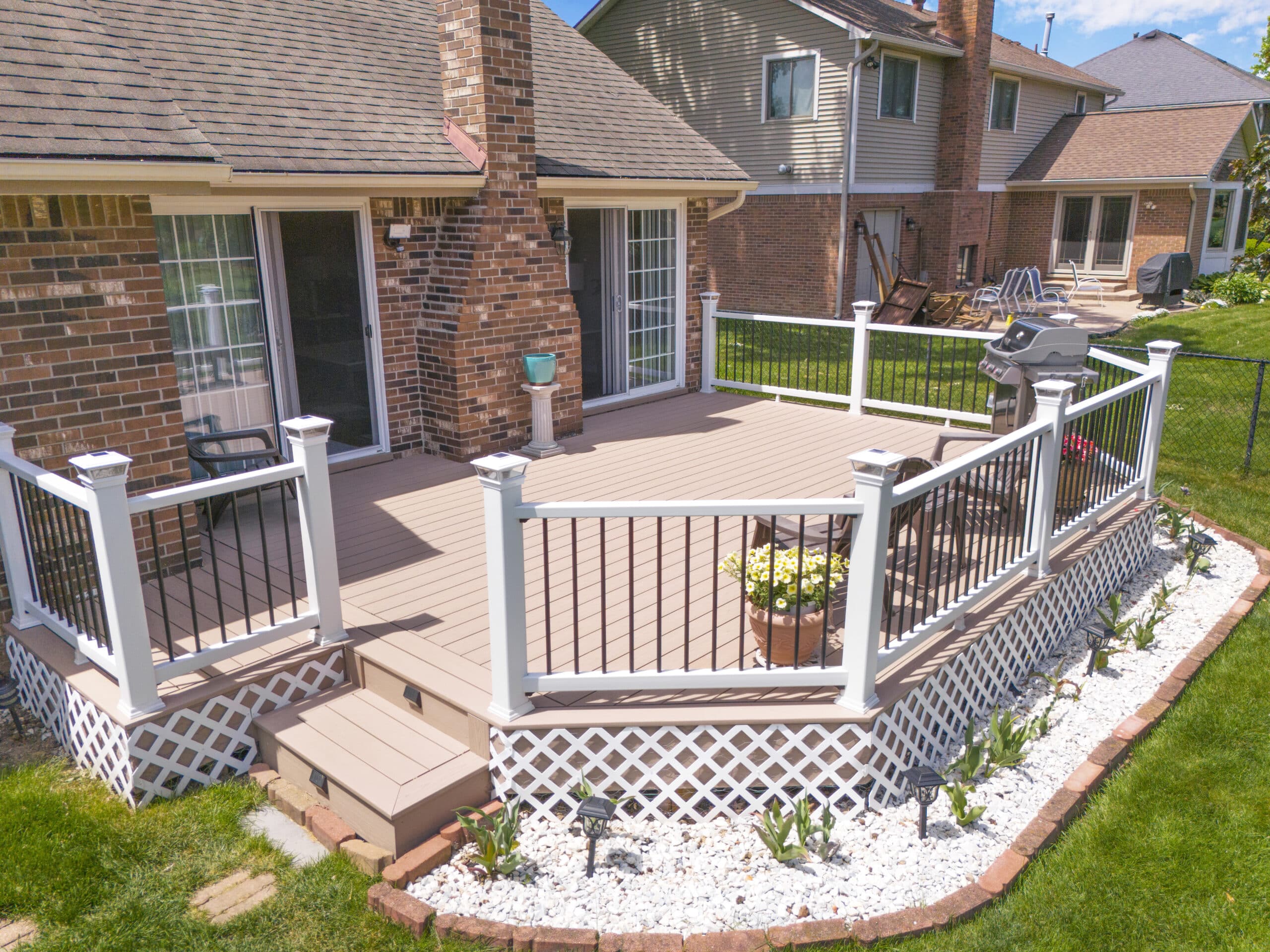
A single level deck is one flat platform at a consistent height. Usually it sits flush with your first floor or slightly raised above ground. Think of it as an outdoor room extension of your home.
These decks are common in Southeast Michigan’s ranch homes and newer subdivisions where yards are relatively flat. The design is straightforward. Build the foundation, frame it up, add decking and railings. Done.
Single level decks create a seamless indoor-outdoor connection. Walk out your back door and you’re immediately in usable outdoor space. No steps to navigate, no transitions between areas.
What is a Low Attached Deck?
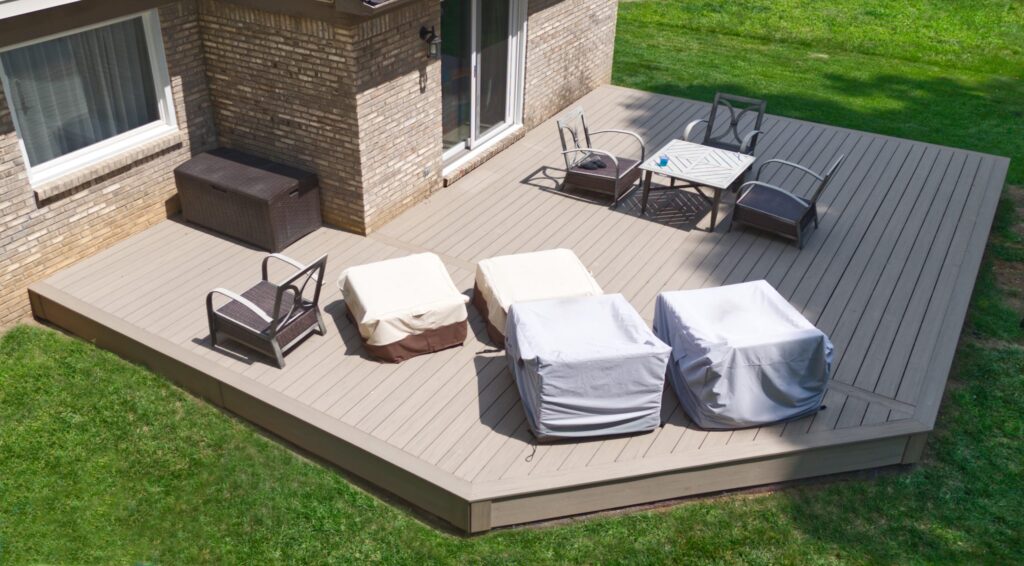
Another type of single level deck is called a “low attached” deck. Low attached decks are less than 36″ off the ground and directly attached to the home. This type of deck can be built more affordably by avoiding the pilings and framing.
What Is a Multi Level Deck?
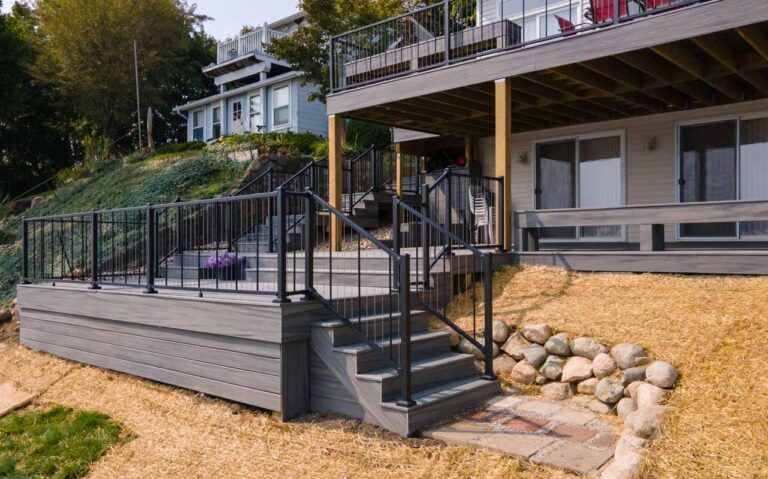
Multi level decks feature two or more platforms at different heights, connected by stairs or short landings. Each level serves a specific purpose. Upper level for dining. Lower level for lounging. Middle level for the grill.
For homes in Ann Arbor’s rolling terrain or lakefront properties around Livingston and Oakland counties, multi level decks work with the natural slope instead of fighting it. They add architectural interest and turn challenging yards into functional spaces.
The levels don’t need dramatic height differences. Sometimes just one or two steps between tiers is enough to create definition and visual appeal.

Single Level Deck Benefits
Simple and affordable. Easier to design, get permits for, and build. Less labor and materials mean lower costs.
Accessible for everyone. No steps between areas makes it safe for kids, seniors, and anyone with mobility concerns. Wheelchairs and walkers move around easily.
Less maintenance. Fewer railings, transitions, and connections means fewer places for problems to develop. Inspections and cleaning take less time.
Great for entertaining. One large open area accommodates big furniture arrangements, dining sets, or a pergola. Everyone gathers in the same space.
Single Level Deck Drawbacks
Limited visual interest. A flat deck is functional but can look plain. Lacks the architectural dimension of tiered designs.
Space feels crowded. When you try to fit a grill, dining table, lounge chairs, and hot tub on one level, things get tight. Hard to create separate zones.
Drainage challenges. On lower-lying yards, water can pool under or around the deck. You might need extra drainage solutions or a raised platform.
Multi Level Deck Benefits
Separate activity zones. Dining area stays distinct from the grill zone. Lounge space doesn’t compete with the hot tub. Better flow and less crowding.
Better looking. Multiple tiers add depth and visual interest. Complements sloped landscapes naturally. Increases curb appeal.
Integrates with your yard. Each level can step into gardens, connect to patios, or follow natural terrain. Creates a cohesive outdoor environment.
Higher resale value. Well-designed multi level decks signal quality and custom work. Buyers notice the difference.
Multi Level Deck Drawbacks
Costs more. Extra framing, railings, and stairs add up. Materials and labor both increase. Expect to pay 50-100% more than a comparable single level deck.
Takes longer to build. Additional engineering and permitting extend the timeline. Construction is more complex.
Accessibility issues. Steps between levels create barriers for small children, elderly family members, or people with mobility limitations.
More maintenance. Extra surfaces, railings, and transitions mean more inspection points and cleaning work.
Choosing Between Single and Multi Level
Do You Have a Multi Story Home? Consider adding deck access at multiple levels of your home.
Look at your yard slope. Flat lots naturally favor single level decks. Sloped or walkout lots work better with multi level designs that follow the terrain.
Think about how you’ll use it. Want one big space for parties? Single level. Want separate zones for cooking, eating, and relaxing? Multi level.
Consider your budget and timeline. Single level decks cost less and build faster. If budget is tight or you need it done quickly, single level makes sense.
Who will use the deck? Young children, seniors, or anyone with mobility concerns does better with single level. Stairs between levels create safety concerns.
Future resale plans. Multi level decks often add more perceived value, especially in upscale areas like Scio Township or Bloomfield Hills. But a well-built single level deck still delivers good return on investment.
Construction Timeline
Single level decks usually take 1-2 weeks from start to finish. Includes framing, decking installation, and railings.
Multi level decks need 3-4 weeks or longer. Weather delays, permit approvals, and custom details like lighting or privacy walls extend the timeline.
Safety Considerations
Multi level decks can be safe for children and seniors with proper design. Use wider steps, continuous handrails, and slip-resistant decking materials. Good lighting on stairs matters too.
For households with toddlers or elderly residents who struggle with stairs, single level decks offer better peace of mind. No steps means no fall risks between deck areas.
Maintenance Requirements
Both deck types need similar basic care. Wash annually with composite-safe cleaner. Check fasteners, flashing, and railings each season. Re-stain if you chose natural wood.
Multi level decks have more railings and stairs, so inspection and cleaning take longer. More transitions means more potential problem spots to monitor.
Can You Convert Later?
Yes, if your original deck was framed with expansion in mind. Many Southeast Michigan homeowners start with a single level deck and later add a step-down section for a hot tub or fire pit.
Talk to your builder about future plans during initial design. Proper foundation work now makes expansion easier later.
Permits and Regulations
Most Southeast Michigan municipalities require building permits for decks over 200 square feet or 30 inches above grade. Ann Arbor and Detroit-area codes follow this pattern.
Multi level decks typically need engineered drawings and sometimes zoning review. The additional structural complexity requires more detailed plans.
Your contractor should handle all permitting including site plans, load calculations, and inspection scheduling. Don’t attempt this yourself unless you’re experienced with local building codes.
Making Your Decision
Single level decks work best for flat yards, straightforward needs, and tighter budgets. They’re accessible, easy to maintain, and provide good open space for entertaining.
Multi level decks solve sloped yard challenges, create distinct activity zones, and add architectural interest. They cost more and take longer but often deliver higher perceived value.
Think about your specific property, how you’ll actually use the deck, and what fits your budget. The right answer comes from your situation, not general rules about which type is better.
Frequently Asked Questions
Which deck type adds more resale value?
Multi level decks generally create stronger visual impact and higher resale value, especially with low-maintenance materials and integrated lighting. But well-built single level decks in Ann Arbor still yield 60-80% return on investment depending on materials and neighborhood.
Can I add a second level to my existing deck later?
Yes, if your original framing was built to support future expansion. Many homeowners in Saline or Plymouth start with single level and later add a step-down patio or secondary tier for a hot tub or fire pit area.
How do I know if my yard slope requires multi level?
If your yard drops more than 2-3 feet from your house to where you want the deck to end, multi level usually works better. Steep slopes make single level decks either very high off the ground or awkwardly positioned.
Are multi level decks harder to furnish?
Slightly. You need to plan furniture for each level separately instead of arranging one large space. But this also creates natural zones that can make decorating easier.
Do insurance rates differ between deck types?
Not usually based on single vs multi level alone. Elevated decks over 30 inches high may affect rates regardless of type. Features like outdoor kitchens or hot tubs matter more than the number of levels.
Which type is better for Michigan winters?
Both handle winter fine if built properly. Multi level decks need more attention to stair safety with ice and snow. Single level decks are easier to shovel and keep clear.
Can I mix materials on a multi level deck?
Yes. Some homeowners use composite on upper levels where they walk more and pressure-treated wood on lower levels. Or different railing styles for each tier. This can control costs while maintaining good looks where it matters most.