
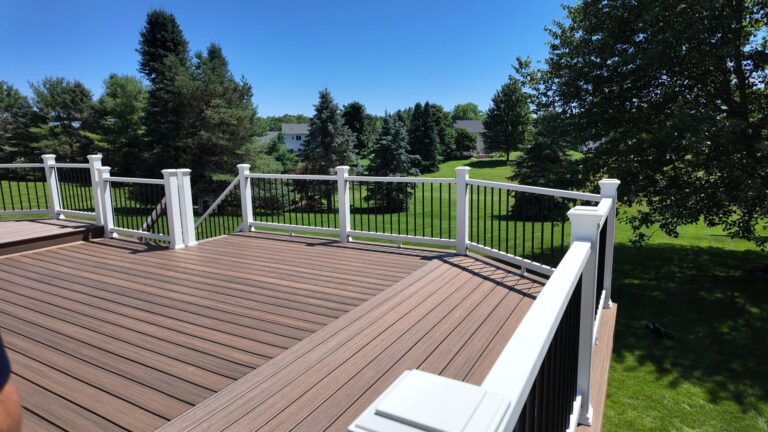
How to Choose a Deck Contractor in Southeast Michigan
Your deck represents a major investment. It’s where you’ll spend summer evenings, host gatherings, and watch your kids play. In Southeast Michigan, where we deal with harsh winters, clay soil, and strict building codes, choosing the right contractor matters more than you might think.
This guide walks you through what to ask, what to look for, and what to avoid when hiring someone to build your deck.
Checklist: Questions to Ask Every Contractor
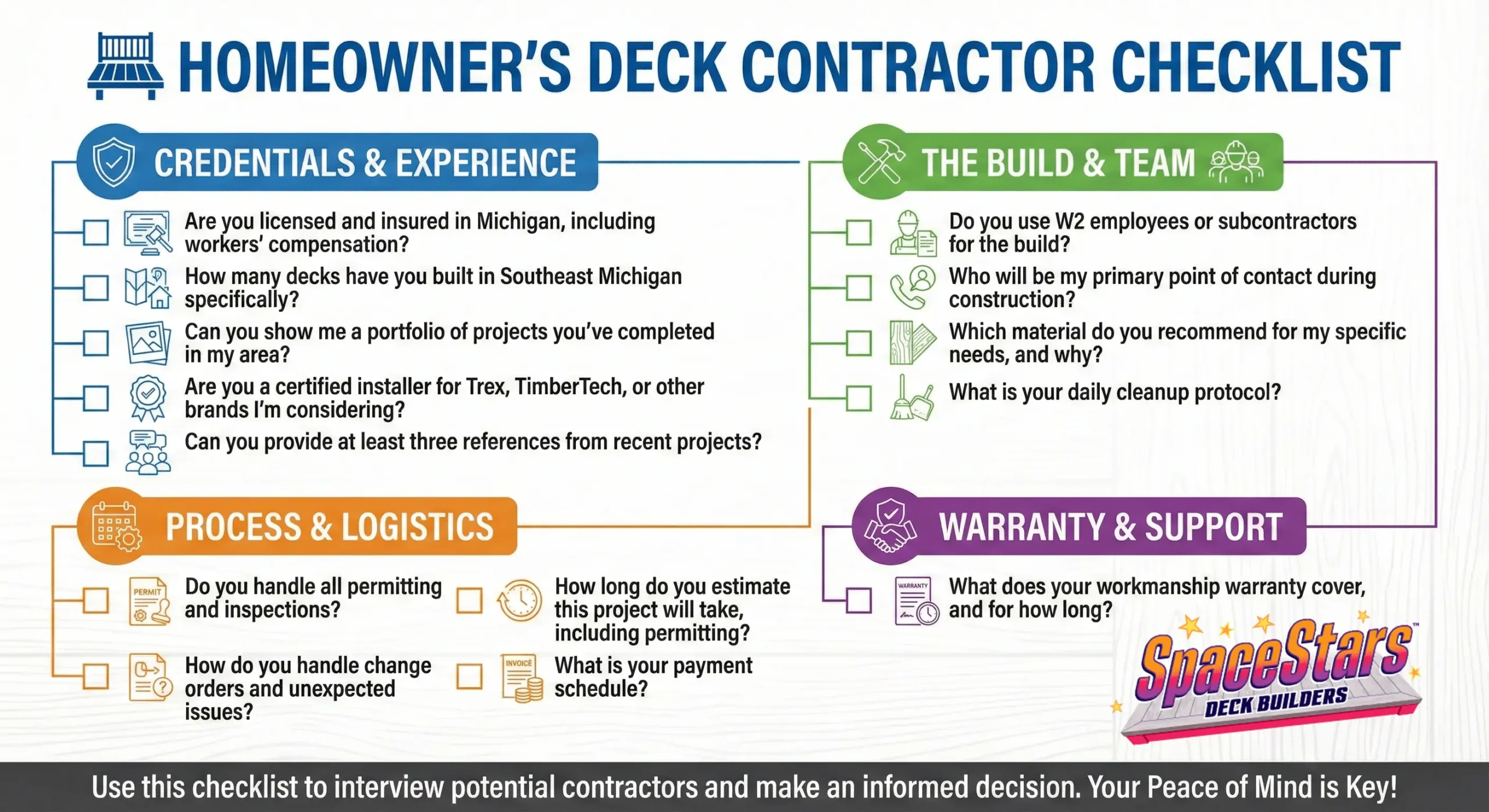
Bring this list to your initial consultations:
- Are you licensed and insured in Michigan, including workers’ compensation?
- How many decks have you built in Southeast Michigan specifically?
- Can you show me a portfolio of projects you’ve completed in my area?
- What does your workmanship warranty cover, and for how long?
- Do you use W2 employees or subcontractors for the build?
- Who will be my primary point of contact during construction?
- How do you handle change orders and unexpected issues?
- Are you a certified installer for Trex, TimberTech, or other brands I’m considering?
- Which material do you recommend, and why?
- What is your daily cleanup protocol?
- Do you handle all permitting and inspections?
- How long do you estimate this project will take, including permitting?
- What’s your payment schedule?
- Can you provide at least three references from recent projects?
We’ll cover why each of these questions are important below.
Licensing, Insurance, and Legal Considerations

Start here. If a contractor can’t produce the right paperwork, walk away.
You need three things verified before you sign anything:
- A Michigan Residential Builder License. Every contractor building decks in Michigan must have one. No exceptions.
- General liability insurance. This protects you if someone gets hurt or your property gets damaged during construction.
- Workers’ compensation coverage. If the contractor has employees (not just subcontractors), they need this. If someone falls off your deck during construction and they’re not covered, you could be liable.
Ask the contractor directly:
“Are you fully licensed and insured to operate in Southeast Michigan, including workers’ compensation?”
- Don’t just take their word for it. Request a Certificate of Insurance directly from their insurance agent. The certificate should list you as an additional insured for the duration of the project.
- Verify their license through the Michigan LARA license lookup. It takes two minutes and could save you thousands in headaches.
- Check with your city’s building department to confirm they’re registered if your municipality requires it. Ann Arbor, Canton, Plymouth, and Novi all have different requirements.
Red flags to watch for:
- A contractor who says “We don’t need permits for this size deck.” Almost every deck in Michigan requires a permit, especially if it’s attached to your house or more than 30 inches off the ground.
- Expired insurance certificates or vague promises to “get you that paperwork later.”
- Contractors who avoid giving you their license number or act defensive when you ask.
Experience and Local Expertise
Building decks in Southeast Michigan isn’t the same as building them in Texas or California. Our freeze-thaw cycles destroy poorly built decks. Our clay soil shifts. Our building codes require footings 42 inches deep or more.

Ask:
“How many years of experience does your company have specifically building decks in Southeast Michigan?”
Five to ten years minimum is what you’re looking for. You want someone who understands local conditions and has built relationships with city inspectors.
A contractor with regional experience knows:
- How to handle ledger boards on older Michigan homes with brick or stone veneer.
- Which cities have the fastest permit turnaround and which ones take six weeks.
- How to space joists correctly for snow load requirements.
- When to use helical piers versus traditional concrete footings in clay soil.
Portfolio, References, and Reputation
Look for variety in their work. Can they handle multi-level decks? Do they install composite and PVC materials, or just pressure-treated lumber? Check their railing systems, stair details, and fascia work.
If every deck in their portfolio looks identical, that’s a concern. You want someone who can adapt to your specific property and design preferences.
Any contractor worth hiring will gladly show you what they’ve built.
Ask:
“Can you provide a portfolio of recently completed local projects?”
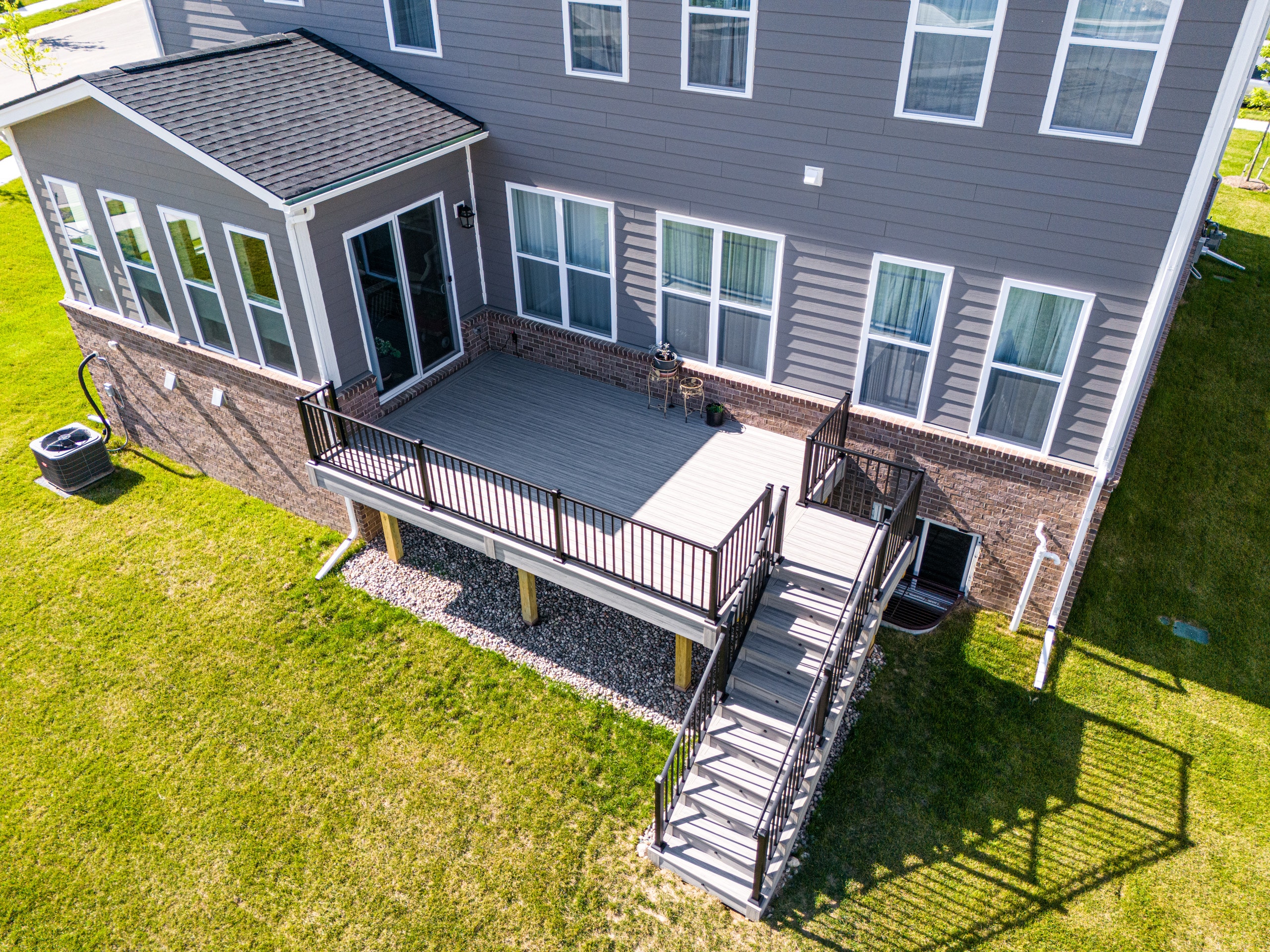
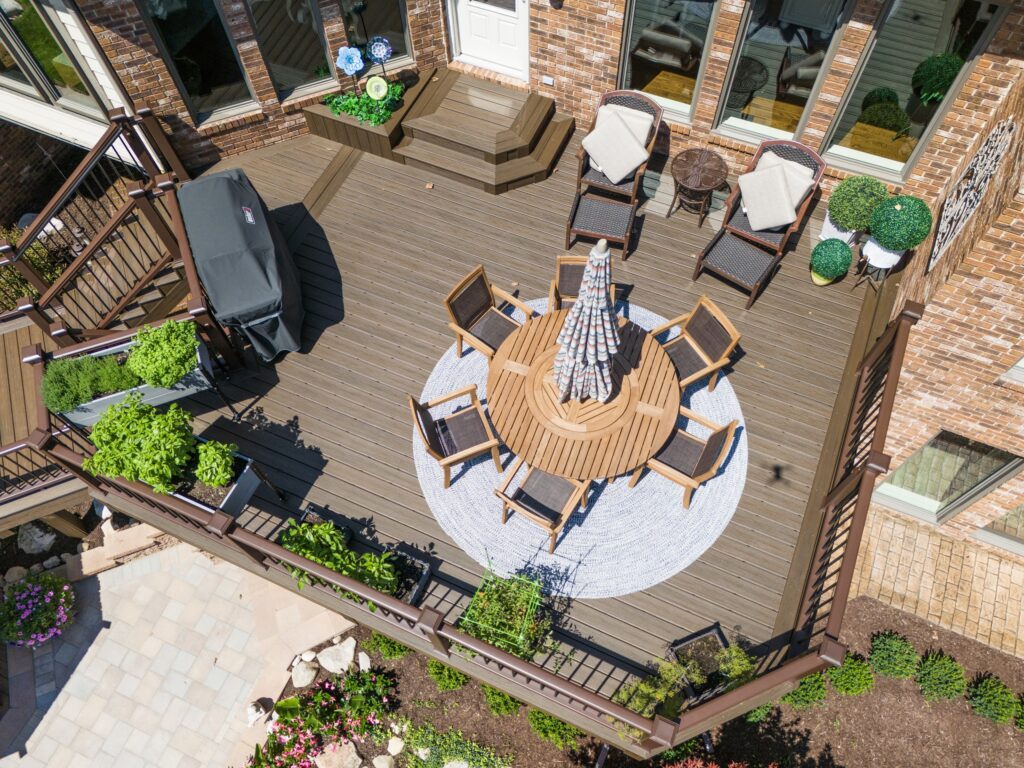
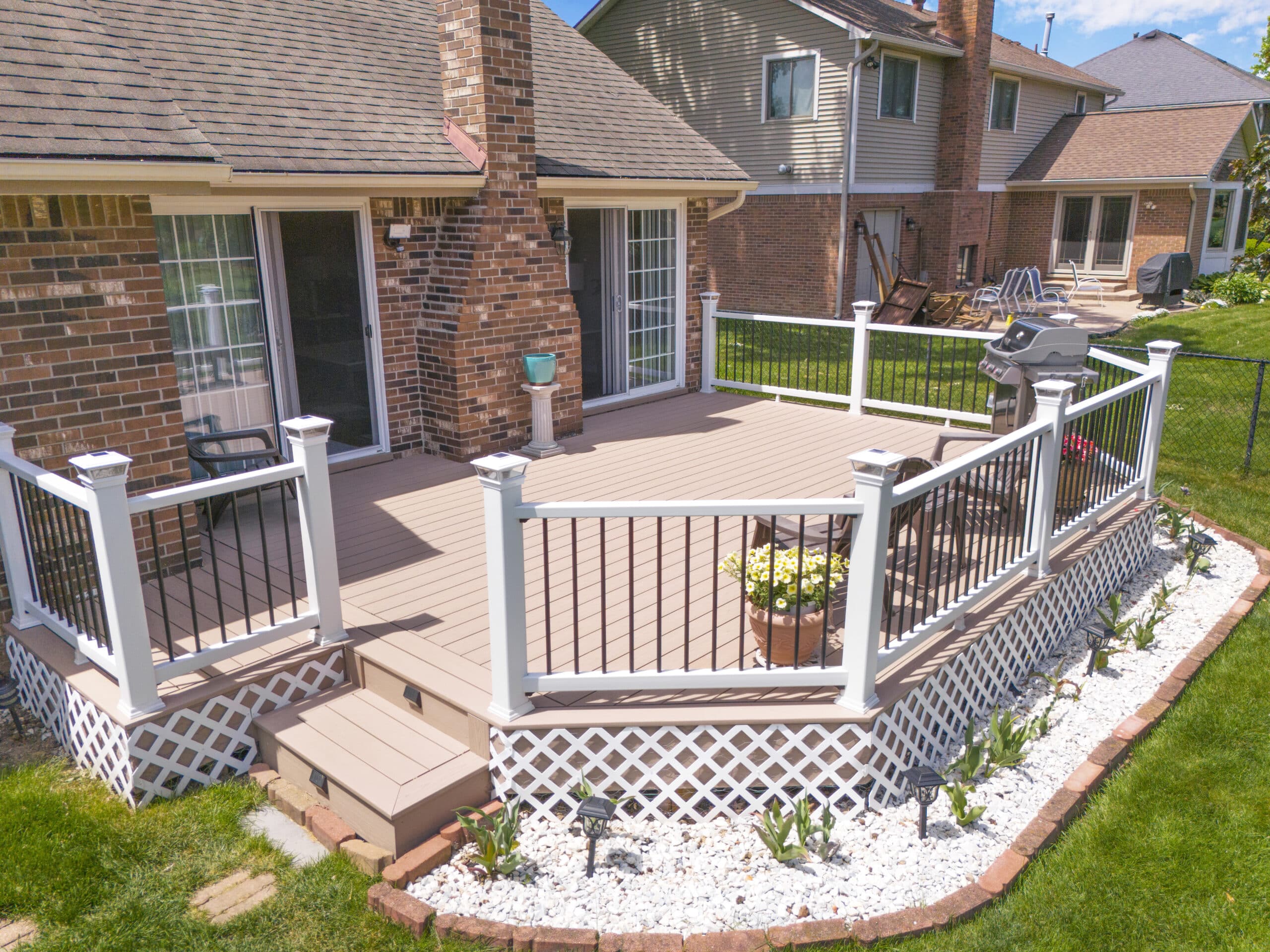
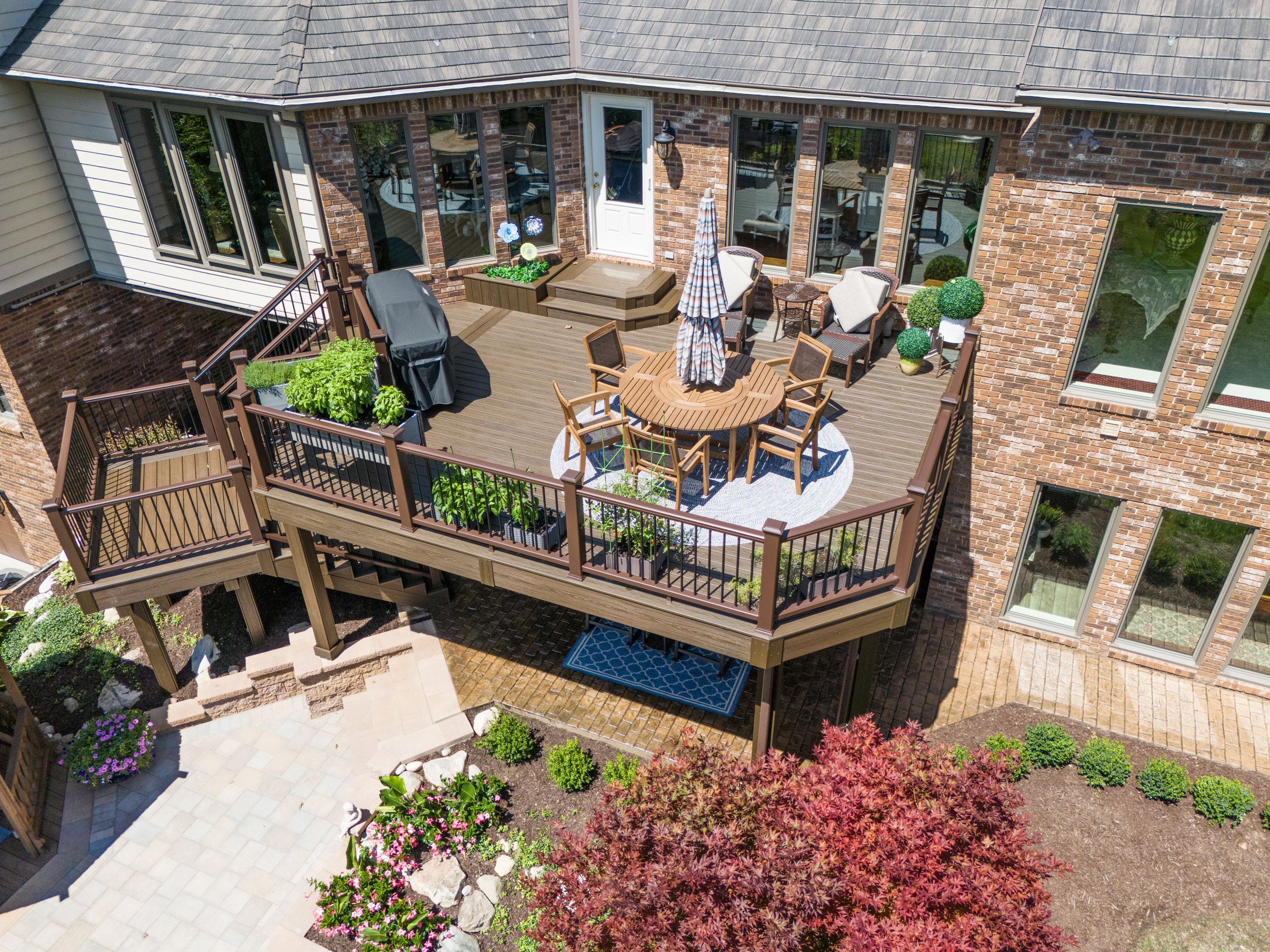
Ask to see their portfolio of local projects. Not stock photos from the manufacturer’s website. Real decks they built in Ann Arbor, Canton, Ypsilanti, or wherever you live.
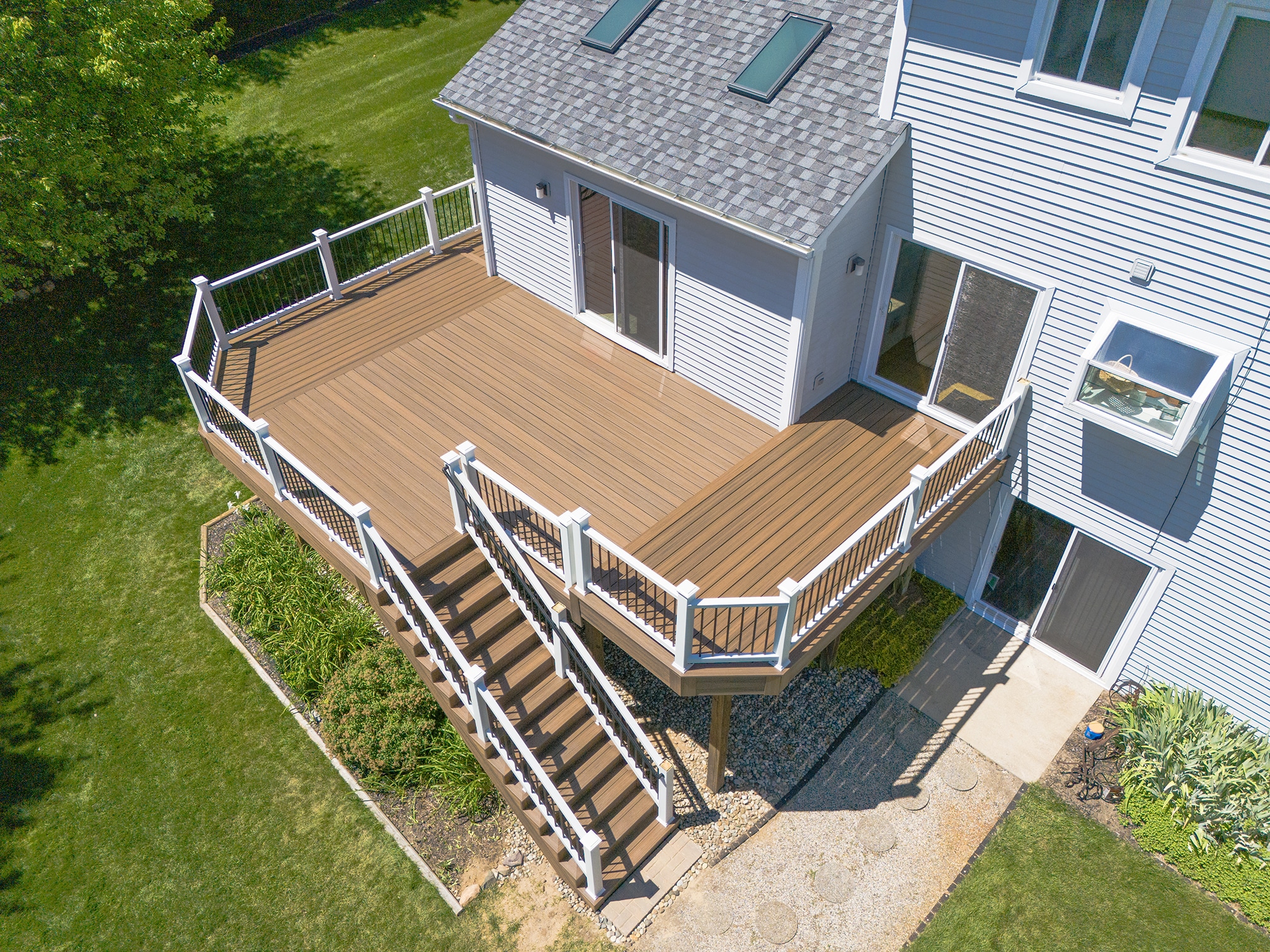
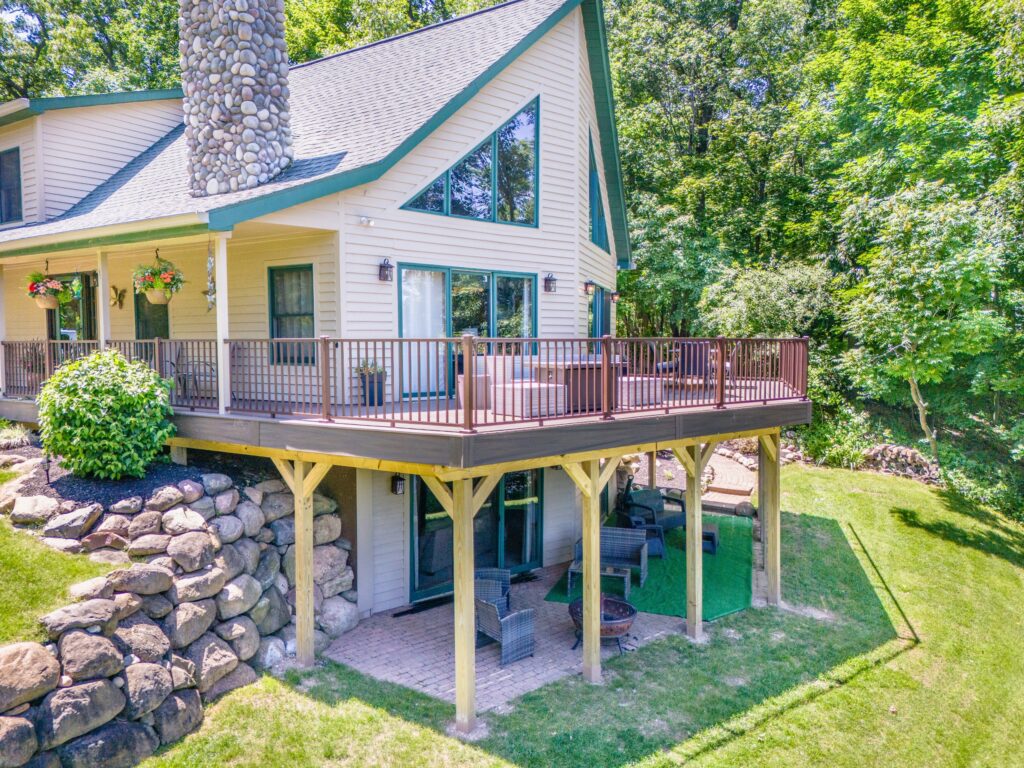
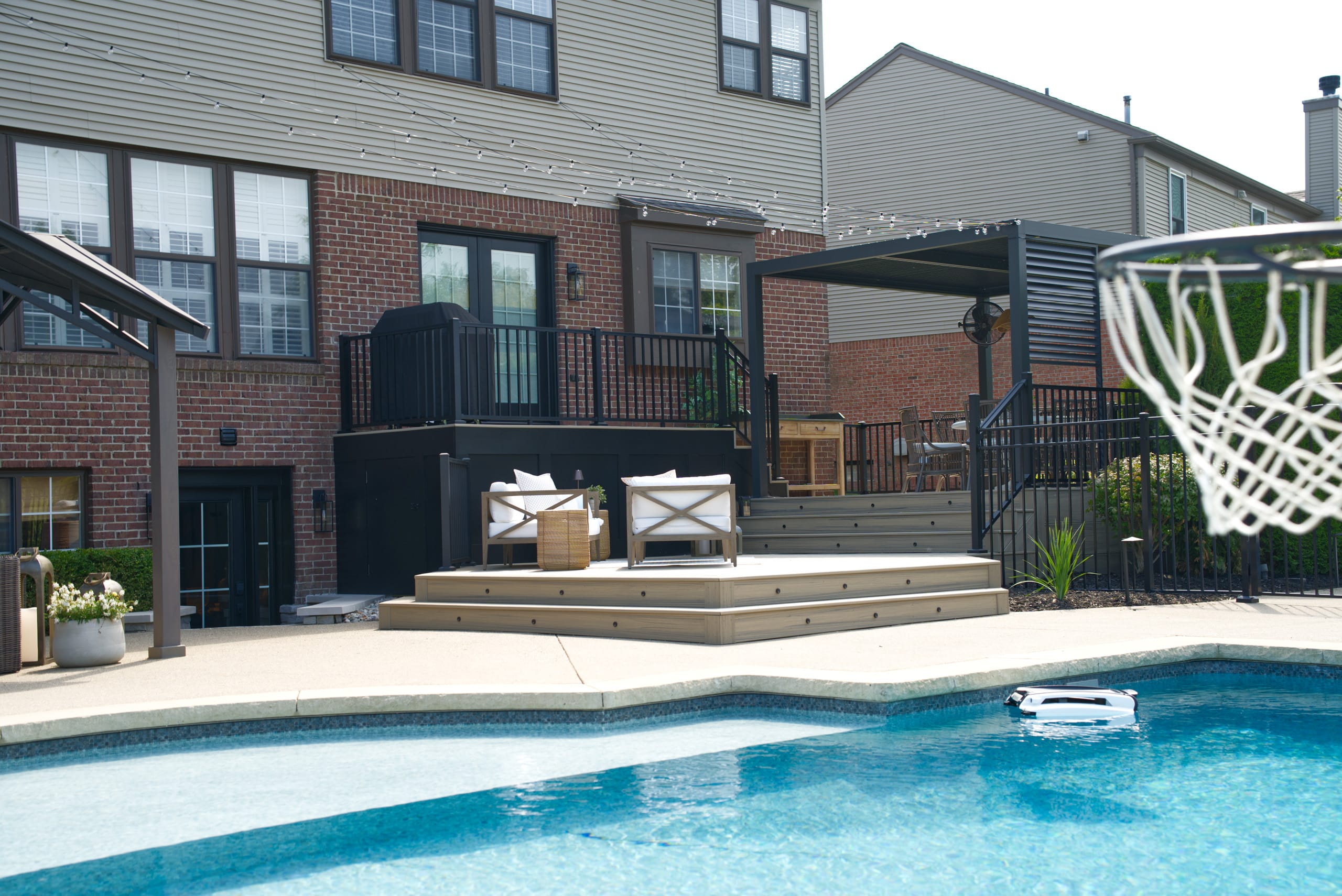
You want to see:
- Photos of finished decks in your area.
- Material lists showing what brands they use (Trex, TimberTech, cedar, pressure-treated).
- Timelines for how long each project took.
- A range of deck sizes and complexity levels.
Next, ask for references. At least three to five homeowners they’ve worked with in the past year or two.
When you call references, ask specific questions:
- Did the crew show up consistently, or were there long gaps between work days?
- How did the contractor handle change orders? Were costs explained clearly before the work was done?
- Did the deck pass inspection on the first try?
- Was the final project completed on the promised timeline, or did it drag on?
- Would you hire them again?
Check online reviews, but take them with some perspective. A few negative reviews among hundreds of positive ones is normal. Look for patterns. If multiple people complain about the same issue (poor communication, surprise costs, shoddy cleanup), that tells you something.
Google reviews, Facebook recommendations, and Nextdoor posts all give you a sense of how contractors treat customers.
One more thing to verify: manufacturer certifications. If you’re considering Trex or TimberTech composite decking, ask if the contractor is a certified installer. Companies like Trex offer TrexPro certifications at different levels (TrexPro Platinum being the highest). Certified installers have been trained by the manufacturer, which often means better warranties and fewer installation mistakes.
Workmanship Warranty and Aftercare

A workmanship warranty covers the contractor’s labor and installation. It’s separate from the material warranty.
Ask:
“What type of workmanship warranty do you offer, and for how long?”
One to five years is standard for deck construction. Some contractors offer longer warranties, which can signal confidence in their work.
Make sure you understand what’s covered:
- Installation defects like loose boards or improperly secured railings.
- Structural issues caused by poor workmanship.
- Problems with joist spacing, ledger attachment, or footing placement.
- What’s typically not covered:
- Natural wood movement and checking (splitting) in pressure-treated or cedar lumber.
- Damage you cause yourself.
- Wear from lack of maintenance.
Material warranties are different. Trex and TimberTech offer 25 to 50-year warranties against fading and staining. But these warranties only apply if the deck is installed correctly by a qualified contractor. If your contractor messes up the installation and your boards start to sag or stain prematurely, the manufacturer can deny your claim.
Ask how the contractor handles warranty claims. Will they coordinate with the manufacturer on your behalf, or do you have to deal with it yourself?
Finally, ask about maintenance recommendations. Composite decking is low maintenance, but it’s not no maintenance. You should clean your deck twice a year, keep debris out of the gaps between boards, and inspect the framing every year or two.
Staffing, Subcontractors, and Team Structure
Some contractors use their own employees. Others rely on subcontractors. Both models can work, but you need to know who’s actually building your deck.
Ask:
“Do you use your own W2 employees or rely on subcontractors for the entire build?”
W2 employees often mean more consistency. The same crew shows up every day, they’re familiar with the company’s standards, and communication is easier. You’re also not dealing with multiple layers of management.
Subcontractors can be great if the contractor vets them carefully and has worked with them for years. Specialist crews sometimes produce better quality work than generalists.
But if the contractor uses a different subcontractor for every job and has no ongoing relationship with them, that’s a red flag. You want to know the crew has experience and accountability.
Ask these follow-up questions:
- Who exactly will be building my deck?
- If you use subcontractors, how do you vet them?
- Will the same crew be on site every day, or will I see different people?
- What’s the typical crew size?
Most deck builds use two to five people: a lead carpenter, helpers, and laborers. Smaller crews can take longer but might be more detail-oriented. Larger crews finish faster but require better coordination.
Project Management and Point of Contact

You don’t want to deal with five different people throughout your project. You need one person who knows what’s happening and can answer your questions.
Ask:
“Who will be my single point of contact during construction?”
This might be a project manager, the owner, or a lead carpenter. Whoever it is, they should be responsible for:
- Scheduling the crew.
- Ordering materials.
- Coordinating inspections.
- Updating you on progress.
- Handling any issues that come up.
Find out how to reach them and how quickly they’ll respond. If you text them with a question at 10 a.m., will you hear back by end of day? Or will it take three days?
Good contractors check in regularly without you having to chase them down. You should know what’s happening each week, when the next phase starts, and if anything changes.
Also clarify decision-making responsibilities. Who picks the exact railing style? Who decides where to route electrical for deck lights? Who determines if an extra post is needed for support?
You don’t want to be making structural decisions you’re not qualified for, but you also don’t want to lose control over aesthetic choices.
Process for Change Orders and Unexpected Issues
Something will come up. It always does.
Maybe the crew discovers rotted joists on your existing deck during demo. Maybe you decide you want the stairs on the other side of the deck halfway through the build. Maybe the city inspector requires an extra beam.
Ask:
“What is your process for handling unexpected issues or change orders during the build?”
A good contractor will:
- Document the issue in writing, ideally with photos.
- Explain what needs to be done and why.
- Give you a cost estimate before starting the work.
- Get your approval in writing.
- Update the timeline if needed.
You should never come home to find extra work completed that you didn’t approve. And you should never be surprised by a bill at the end of the project.
Change orders should be simple: the contractor identifies the issue, you discuss options, you agree on cost and timeline, they do the work.
Weather delays are common in Michigan, especially if you’re building in late fall or early spring. Concrete needs time to cure. Inspectors don’t work as quickly in winter. Rain can halt work for days.
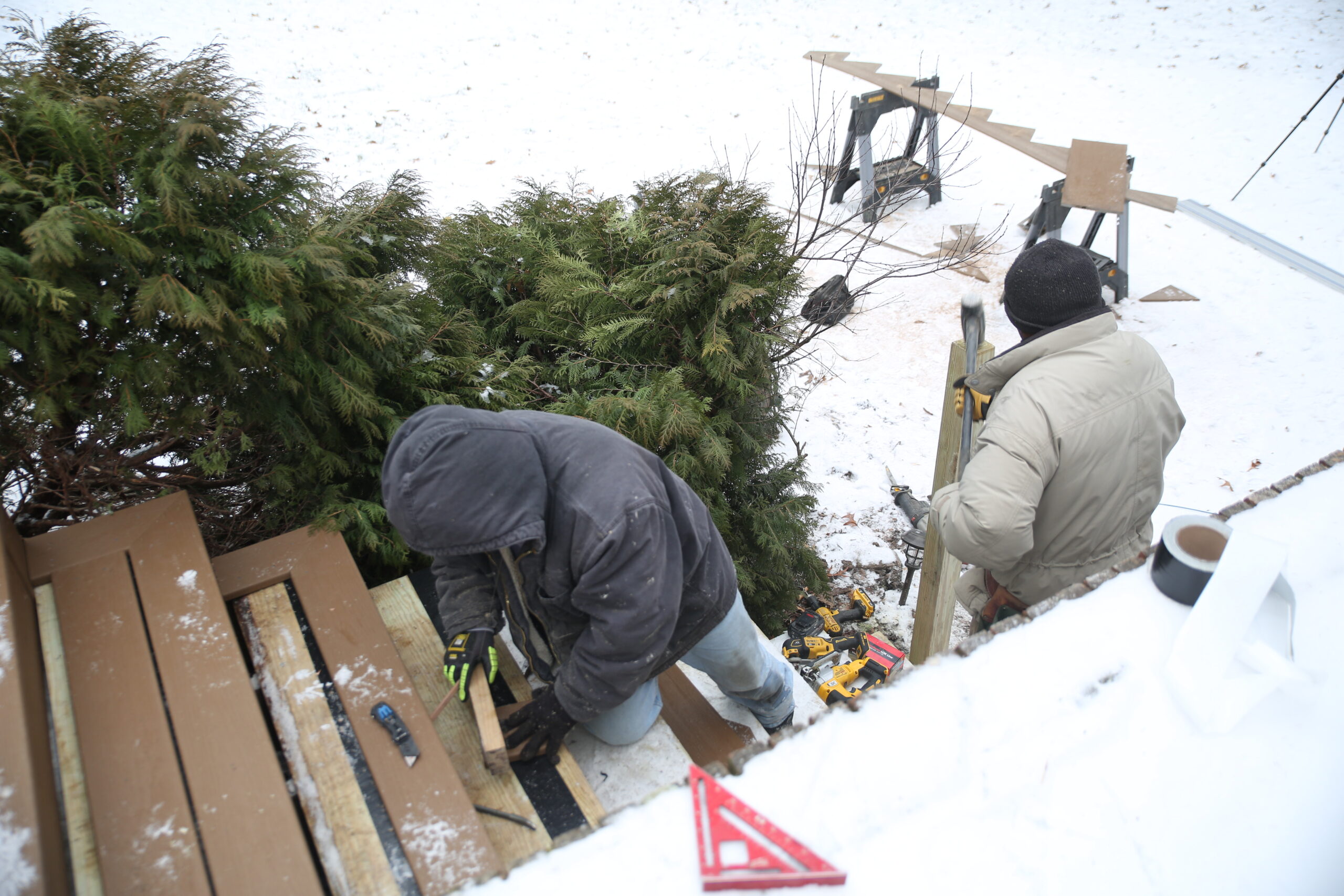
Ask how the contractor handles weather delays. Do they build buffer time into the schedule? Will they let you know if the timeline needs to shift?
A contractor who promises a two-week timeline in November with no contingencies is either naive or dishonest.
Material Brands, Certifications, and Installers
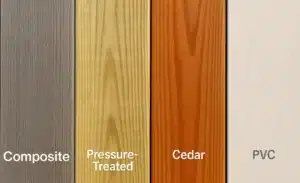
Not all contractors are qualified to install all materials.
If you’re considering Trex, TimberTech, or another composite brand, ask: “Are you a certified or preferred installer for the specific material brands under consideration?”
Certification matters because:
- Manufacturers train certified installers on proper techniques.
- Certified installers often get better pricing on materials.
- Some warranties require installation by a certified contractor.
- You get access to manufacturer support if something goes wrong.
Trex has a TrexPro certification program with three levels. TimberTech has a similar program. If your contractor isn’t certified, it doesn’t mean they can’t do the work, but it does mean they haven’t been vetted by the manufacturer.

You also need to understand the differences between materials:
Pressure-treated lumber is the cheapest option. It requires the most maintenance (staining or sealing every few years) and doesn’t last as long in Michigan’s climate. But it’s still a solid choice if you’re on a tight budget.
Cedar looks great and smells better. It’s more rot-resistant than pressure-treated pine, but it still needs regular maintenance and will degrade faster than composite in our wet climate.
Composite decking (Trex, TimberTech, Fiberon) is the best long-term value. It won’t rot, warp, or splinter. It resists stains and fading. The upfront cost is higher, but you save on maintenance and replacement.
PVC decking is the premium option. It’s fully synthetic, so it handles moisture and heat better than composite. It’s also the most expensive.
Ask the contractor which materials they recommend for your specific situation and why.
Site Preparation, Safety, and Cleanup
A messy job site tells you everything you need to know about a contractor’s standards.
Ask:
“What is your standard protocol for site cleanup and debris removal?”
Daily cleanup should include:
- Sweeping up sawdust and debris.
- Stacking lumber neatly.
- Running a magnetic sweep to pick up nails and screws (you don’t want these in your lawn or your dog’s paw).
- At project completion, the contractor should haul away all waste, leftover materials, and any old decking they demoed.
Safety is part of this. If your deck is elevated, the crew should install temporary railings to prevent falls. They should protect your grass and landscaping from heavy equipment. Materials should be staged in a secure area where they won’t be a hazard.
Permits and Paperwork
Permits and inspections are another critical piece. Your contractor should handle everything:
- Applying for the permit.
- Submitting engineering drawings if required.
- Scheduling all inspections (footing, framing, final).
- Making any corrections the inspector requires.
- Getting final approval.
You shouldn’t have to call the city yourself or figure out when to schedule inspections. That’s the contractor’s job.
Ask directly:
“Do you handle all permitting and inspections, or is any of that on me?”
If they hesitate or suggest you pull the permit yourself to “save money,” walk away. That’s a red flag.
Budgeting, Timeline, and Project Phases

Deck projects almost always cost more than homeowners expect. Not because contractors are dishonest, but because there are a lot of variables.
Hidden costs to plan for:
- Additional footings if your soil conditions are poor.
- Stairs and landings (these add up fast).
- Lighting (low-voltage LED systems, post cap lights, step lights).
- Upgraded railing systems (cable rail, glass panels, composite balusters).
- Grading or drainage work to prevent water pooling under the deck.
- Disposal fees for old materials.
- Rot repair if your existing deck or house framing has hidden damage.
Ask for a detailed estimate that breaks down costs by category: framing, decking, railing, stairs, permits, labor. If the estimate just says “deck: $15,000,” push for more detail.
Typical timelines for a standard deck:
Design and planning: 2 to 7 days.
- Permitting: 2 to 6 weeks (varies by city).
- Framing: 3 to 5 days.
- Decking and fascia: 3 to 6 days.
- Railing installation: 1 to 3 days.
- Final cleanup and inspection: 1 to 2 days.
Small projects might take two weeks once work starts. Larger or more complex decks can take a month or more, especially if there are inspection delays.
Weather can blow up any timeline. A week of rain in June can push your completion date by two weeks. Winter builds take longer because concrete cures slower in cold weather.
Red Flags and Due Diligence
Trust your gut. If something feels off, it probably is.
Major red flags:
- Quotes that are significantly lower than others you’ve received. Either the contractor is cutting corners, planning to hit you with surprise charges later, or doesn’t know what they’re doing.
- Missing or expired licenses and insurance.
- No written contract, or a contract that’s vague about scope, timeline, and payment terms.
- No portfolio of local Michigan projects. Stock photos from the manufacturer don’t count.
- High-pressure sales tactics (“This price is only good today” or “We need a deposit right now”).
- No mention of permits or inspections.
- Consistently messy job sites if you drive by their current projects.
- Vague warranty language that doesn’t specify what’s covered or for how long.
- Contractors who won’t provide references or get defensive when you ask questions.
You’re making a major investment in your home. You have every right to ask hard questions and walk away if you don’t like the answers.
What to Prepare Before You Start Interviewing
Get these things ready before you meet with contractors:
Rough sketches or ideas of what you want. You don’t need professional drawings, but having a sense of size, shape, and features helps.
- Photos of your current space, including the area where the deck will attach to your house.
- A realistic budget range. Be honest about what you can spend.
- Your material preferences. If you know you want composite over wood, say so upfront.
- A list of must-haves versus nice-to-haves. Heated deck? Built-in planters? Pergola? Separate these into categories so you can adjust if needed.
- Questions about your property. Is there a septic tank or utility lines where the deck will go? Is there a slope or drainage issue? These affect design and cost.
The more prepared you are, the better the estimates you’ll receive.
Final Thoughts
Choosing a deck contractor takes time. You’re going to meet with multiple companies, compare estimates, check references, and verify credentials.
It’s tempting to just pick the cheapest bid and get it over with. But a poorly built deck is expensive to fix and potentially dangerous. In Michigan’s climate, bad workmanship shows up fast: rotting posts, loose boards, failed footings.
Focus on finding someone who communicates clearly, has a strong local reputation, understands Michigan building codes, and backs their work with a real warranty.
Your deck should last 20 to 30 years or more. That only happens when it’s built right from the start.