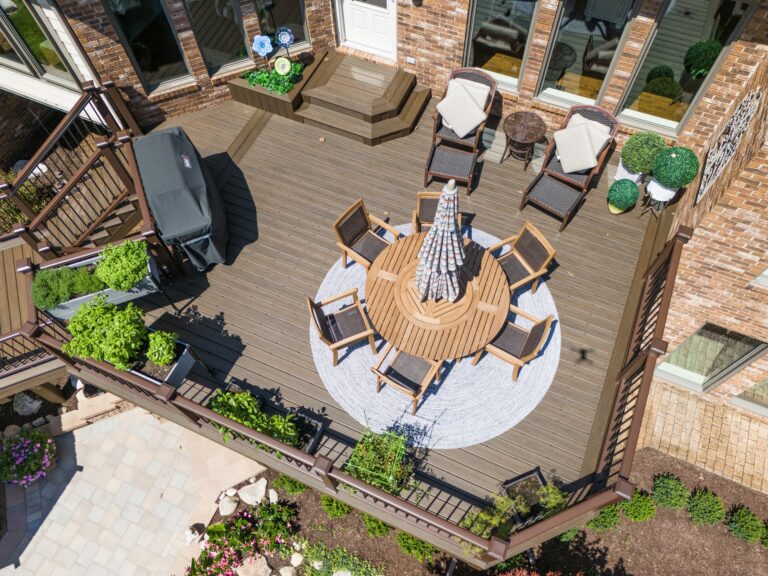
Deck Inspection Checklist: 10 Signs It’s Time to Replace Your Deck in Southeast Michigan
Your deck gets hit hard. Sun beats down all summer. Rain soaks it in spring. Snow piles up in winter. Then everything freezes and thaws dozens of times before April. Michigan weather ages decks faster than most homeowners expect.
Most people don’t inspect their decks until something feels wrong: a soft spot underfoot, a wobbly railing. By then, the problems have usually spread beyond what you can see.
This guide walks you through a 30 to 45 minute inspection you can do yourself. You’ll learn what to look for, what’s dangerous, and when to stop patching and start planning a new deck. If you’re hoping to be on a new deck by summer 2027, now is the time to find out what shape your current one is in.
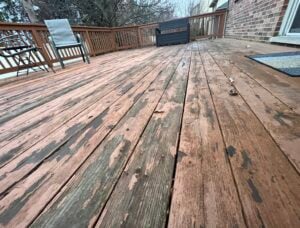
How Long Your Deck Should Last
Different deck materials age at different rates.
Pressure-treated wood typically lasts 10 to 15 years. Poor maintenance or bad construction can cut that to 5 to 8. Wet conditions speed up rot, even in treated lumber.
Cedar usually lasts 15 to 20 years. Its natural oils resist rot better than pressure-treated pine.
Composite decking lasts 25 to 30 years. The boards won’t rot, but the wood framing underneath still can, so you need to inspect both.
PVC decking lasts 25 to 30 years or more. It’s fully synthetic, so moisture doesn’t hurt it.
Aluminum can last 40 years or more. It’s nearly indestructible in residential use.
These numbers assume decent installation and basic care. Skip maintenance or build it wrong, and everything fails sooner.
Why Southeast Michigan Is Hard on Decks
Freeze-thaw cycles split wood and loosen fasteners. Water gets into small cracks, freezes, expands, and makes the cracks bigger. This repeats all winter.
Frost heave pushes footings up and down. That’s why local code requires footings below the frost line, which is 42 inches in most of Southeast Michigan. Older decks built on shallow footings or deck blocks often shift out of level.
Clay soil is common from Ann Arbor to Livingston County, and it doesn’t drain well. Water pools around posts and under decks, keeping the framing damp.
Wet springs keep decks damp for weeks as snow melts, which gives rot and mold ideal conditions.
Summer humidity means shaded decks may never fully dry between rains.
Snow loads add weight. Heavy, wet snow sitting on a deck for weeks stresses beams and posts, especially on older decks that weren’t built for it.
Ice melt and rock salt can corrode metal fasteners and connectors and damage some decking surfaces. Check your decking manufacturer’s guidance before salting your deck.
Safety Red Flags: Stop Using the Deck If You See These
Before the detailed inspection, walk the deck and look for immediate dangers:
- A railing that moves when you push on it
- Spots that bounce or feel spongy underfoot
- Gaps or rot where the deck meets your house
- Obvious decay, soft wood, or insect damage in posts, beams, or joists
- A deck that visibly sags or leans
If you find any of these, keep everyone off the deck, especially kids and pets, until a professional looks at it. For an unsafe railing on a raised deck, block the area with caution tape or cones so nobody leans on it. These aren’t DIY fixes.
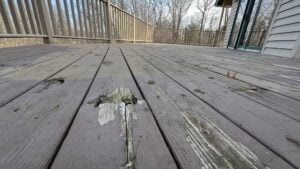
Step 1: Inspect the Deck Surface
Walk across the entire deck and look closely at the boards.
- Soft spots: Press down on boards. Healthy wood or composite feels solid. Soft or spongy means rot, either in the board or the framing below.
- Splintering: Some surface wear is normal. Widespread splintering means the wood is breaking down.
- Cupping or warping: Boards with curled edges or twists are showing moisture damage and age.
- Lifting boards: Boards pulling up around screws or nails mean the fasteners are failing.
- Popped fasteners: Nails and screws backing out create trip hazards. This happens as wood shrinks and swells through Michigan’s seasons.
- Gaps: Small gaps are normal for drainage. Large gaps mean boards have shrunk significantly or weren’t installed properly.
Minor discoloration or light splintering can often be fixed by refinishing. Multiple soft boards or widespread lifting usually point to structural problems underneath.
Step 2: Check Railings and Stairs
Railings keep people from falling off your deck. They need to be solid.
- Grab the railing with both hands and push hard in several directions. Any movement at all is a problem.
- Wiggle individual balusters to check for looseness.
- Check where railing posts connect to the deck for rot or weak attachments.
- Look at metal connectors for rust. Surface rust is cosmetic. Rust that has eaten into the metal is dangerous.
For stairs:
- Check the stringers, the diagonal boards on each side that carry the weight, for cracks or sagging.
- Walk each tread. None should move or flex.
- Test the handrail the same way you tested the deck railing.
Step 3: Look Under the Deck
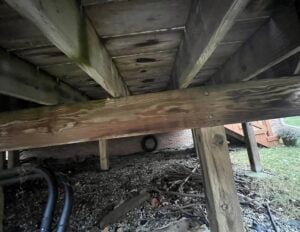
This is where the real story is. Grab a flashlight and a flathead screwdriver.
Posts should sit on concrete footings, not directly on soil. Check the base of each post for rot or insect damage, since wood in contact with the ground fails first. Give each post a firm shake. Any wobble means a failing connection.
Post connections should use through-bolts or structural metal connectors. Posts held on with only nails aren’t strong enough and are a common sign of an older or amateur build.
Beams and joists are the horizontal framing under your boards. Look for sagging, cracks, and soft spots. Watch for notches or holes someone cut into them, which weaken the wood.
Hardware matters as much as the wood. Look for rusted, missing, or bent joist hangers, bolts, and brackets.
Insect damage is a real concern in Southeast Michigan. Carpenter ants and termites both damage wood decks. Look for small holes, piles of sawdust-like debris, or wood that sounds hollow when you tap it.
Footings should be solid and level. Large cracks, crumbling concrete, or footings that have sunk or heaved mean the deck isn’t properly supported.
If joists show rot, water damage, or insect damage, don’t use the deck until they’ve been evaluated and repaired or replaced.
Step 4: Inspect the Ledger Board
The ledger board attaches your deck to your house. It’s the most critical connection, and ledger failure is one of the leading causes of deck collapse.
- Attachment: The ledger should be fastened with through-bolts or structural screws, not nails.
- Flashing: Look for metal or membrane flashing above the ledger. It keeps water from getting behind the board and rotting both the deck and your house.
- Water damage: Look for stains on your siding, soft wood, or visible rot where the ledger meets the house.
- Gaps: Any separation between the ledger and the house is an emergency.
A failing ledger usually means a rebuild, not a repair. It may also mean damage to your home’s rim joist that needs fixing first.
Bought a House with an Existing Deck?
If your deck came with the house, you probably don’t know who built it, when, or whether it was permitted. That’s worth finding out.
- Check the home inspection report. Home inspectors often flag decks, but a general inspection isn’t a structural deck evaluation.
- Look up permit history. Your city or township building department can tell you whether a permit was pulled and the deck passed inspection. Our deck permit guide explains how permits work in Southeast Michigan.
- Estimate the age. Nailed-on ledgers, posts buried directly in the ground, and wide gaps between balusters all point to an older build.
If you can’t confirm the age or whether the deck meets code, have a professional inspect it before the first summer party.
Is Your Older Deck Up to Current Code?
Building codes change because people get hurt on decks that seemed fine. A deck that passed inspection 20 years ago may not meet today’s Michigan Residential Code. Common gaps on older decks include:
- Guardrail height: Current code generally requires guards at least 36 inches high on decks more than 30 inches above grade.
- Baluster spacing: Openings must be small enough that a 4-inch sphere can’t pass through. Many older decks have wider spacing that a small child could slip through.
- Ledger attachment: Nails alone are no longer acceptable. Many decks also now need lateral load connectors.
- Footing depth: Footings must extend below the frost line.
- Stairs: Current code limits riser height, sets a minimum tread depth, and requires a graspable handrail on stairs with four or more risers.
Requirements vary slightly by municipality. Your local building department or a licensed deck builder can tell you exactly what applies to your home.
Repair, Renovate, or Rebuild?
Repair makes sense when the structure is solid but a few boards, a railing section, or some hardware needs replacing. This usually costs hundreds to a few thousand dollars.
Resurfacing means replacing boards and railings on the existing frame. It works only when the framing, footings, and ledger are in good shape. Putting 30-year composite boards on 15-year-old framing is like putting new tires on a car with a failing engine.
A full rebuild is the answer when you find multiple red flags, ledger problems, makeshift construction, or a deck near the end of its expected life. Starting fresh gets you modern materials, current code compliance, and a new warranty.
Quick scoring rule: Count the problems you found using the checklist below. One or two issues usually mean repair. Five or more usually mean rebuild. Anything on the red flag list means call a professional, whatever the count.
When to Inspect Based on Age
5 years: Inspect early if you suspect poor construction. Bad work shows up fast in Michigan.
10 years: Do a thorough inspection on any wood deck. This is when problems start appearing.
15 years: Start planning replacement for pressure-treated decks, even if they look okay.
20+ years: Most wood decks need replacement by this age. Hidden problems are almost certain.
The Best Time to Inspect Your Deck in Michigan
Inspect twice a year:
- Spring, after the thaw: Look for freeze-thaw damage, heaved footings, popped fasteners, and anything winter loosened.
- Fall, before the first snow: Catch problems before your deck spends four months under snow and ice.
Planning a Replacement for 2027?
If your inspection points toward a new deck, timing matters in Southeast Michigan. Spring and early summer schedules fill up fast, and permits alone can take two to six weeks depending on your city.
A realistic timeline for a summer 2027 deck:
- Fall 2026: Inspect your current deck and decide whether to repair or replace.
- Winter: Get quotes, finalize your design, and choose materials. Our guide to hiring a deck contractor walks you through the vetting process.
- Late winter: Your contractor submits permits.
- Spring: Build once the ground thaws and footings can be poured.
Homeowners who start in winter get the most scheduling options. Homeowners who start in June usually get “we can fit you in August.”
Should You Hire a Professional Inspector?
Call a professional when you’re unsure about the structure, found red flags, or are planning major work.
A professional inspection focuses on the ledger, joists, posts, footings, and fasteners, where decks typically fail. Expect to pay [$200 to $400] for a professional deck inspection in Southeast Michigan. [SpaceStars offers free deck assessments for homeowners considering replacement.]
The inspection cost is small compared to making the wrong call on repair versus replacement.
Quick Deck Inspection Checklist
- Soft, warped, or cupped boards
- Wobbly railings or loose balusters
- Cracked or sagging stairs
- Rot, cracks, or insect damage in posts, beams, or joists
- Posts attached with nails only
- Gaps between the ledger board and house
- Missing or damaged flashing above the ledger
- Rusted or corroded metal connectors
- Cracked, sunken, or heaved footings
- Water stains on your house near the deck
Frequently Asked Questions
How often should I inspect my deck?
Twice a year: in spring after the snow melts, and in fall before winter. Wood decks need more attention than composite.
What’s the screwdriver test?
Push a flathead screwdriver into wood components like joists, posts, and the ledger. Healthy wood resists. If the screwdriver sinks in more than about a quarter inch, you have rot. Test several spots, especially near the ground and where water collects.
Can I repair just part of my deck?
Yes, when problems are isolated. Replacing a few boards or one railing section makes sense. If you’re finding problems everywhere, patchwork repairs on a failing deck waste money.
How do I know if my ledger board is bad?
Look for gaps between the ledger and the house, soft or rotting wood, rust stains from failing fasteners, missing flashing, and water stains on the siding. A bad ledger needs immediate attention.
What does a sagging deck mean?
Sagging means structural failure in the joists, beams, or posts. Stand at the outer edge and look back toward the house. The surface should look level. Visible dips mean you need a professional immediately.
Are cracks in concrete footings serious?
Small surface cracks are normal. Large cracks, crumbling concrete, or footings that have shifted or sunk are real problems. Michigan frost heave moves shallow footings over time.
How much movement in a railing is okay?
None. Railings should be completely solid when you push hard. Code requires guards to resist a 200-pound load applied in any direction, so any wobble means a connection has failed.
What’s the difference between mold and rot?
Mold is green or black discoloration you can scrub off. It’s cosmetic. Rot makes wood soft, spongy, or crumbly, and it can’t be cleaned away. Rot is a structural problem.
Do composite decks rot?
The boards don’t. The wood framing underneath still can, so composite decks need frame inspections too.
Is it worth repairing a 20-year-old wood deck?
Usually not. A 20-year-old pressure-treated deck is past its expected lifespan, and hidden deterioration is likely. That money is usually better spent on a new deck built to last another 25 to 30 years.
Should I worry about insect damage?
Yes. Carpenter ants and termites can damage wood decks in Southeast Michigan. Look for small holes, sawdust piles, or hollow-sounding wood. If you see signs of activity, have a pest professional assess it before deciding on repairs.
Is rock salt bad for my deck?
It can be. Salt corrodes metal fasteners and connectors and can damage some decking surfaces. Check your decking manufacturer’s recommendations before using any ice melt.
Trust Your Instincts
If your deck feels unsafe, it probably is. One problem is a repair. A pile of problems is a deck telling you it’s done.
When it’s time to replace, modern composite and PVC decking gives you decades of outdoor living without the yearly staining, sealing, and board-swapping.
SpaceStars Deck Builders is a licensed Michigan builder and TrexPro Platinum installer serving homeowners across Washtenaw, Oakland, Livingston, Wayne, and Macomb counties. See our recent projects, or schedule your free design consultation to start planning your 2027 deck.