
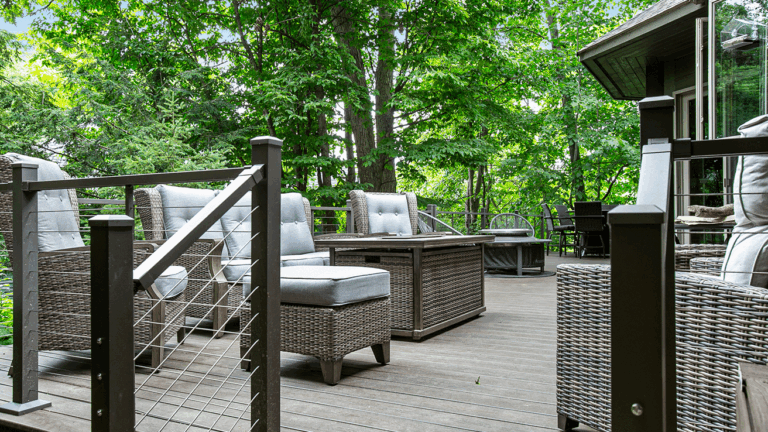
Outdoor living matters in Southeast Michigan. When spring finally arrives after those long winters, you want to get outside. A deck gives you that space—somewhere to grill, relax, or host friends without leaving your property.
Decks add real value too. They expand your usable space and catch the eye of future buyers. But here’s the thing: Michigan weather is tough on outdoor structures. You get wet, snowy winters followed by hot, humid summers. Your deck needs to handle all of that.
Key Takeaways
- Best low-maintenance deck material for SE Michigan: Composite decking such as Trex or Timbertech
- Permits required for attached decks, decks over 30″ in height, or for decks 200 sqft and up.
- Decks add around 70% of their cost to your home’s value
Popular Deck Styles and Designs
Traditional Backyard Decks
Basic rectangles or squares attached to your back door. Simple, affordable, and practical for grilling or relaxing. Most Michigan homeowners start here because they’re easy to build and use.
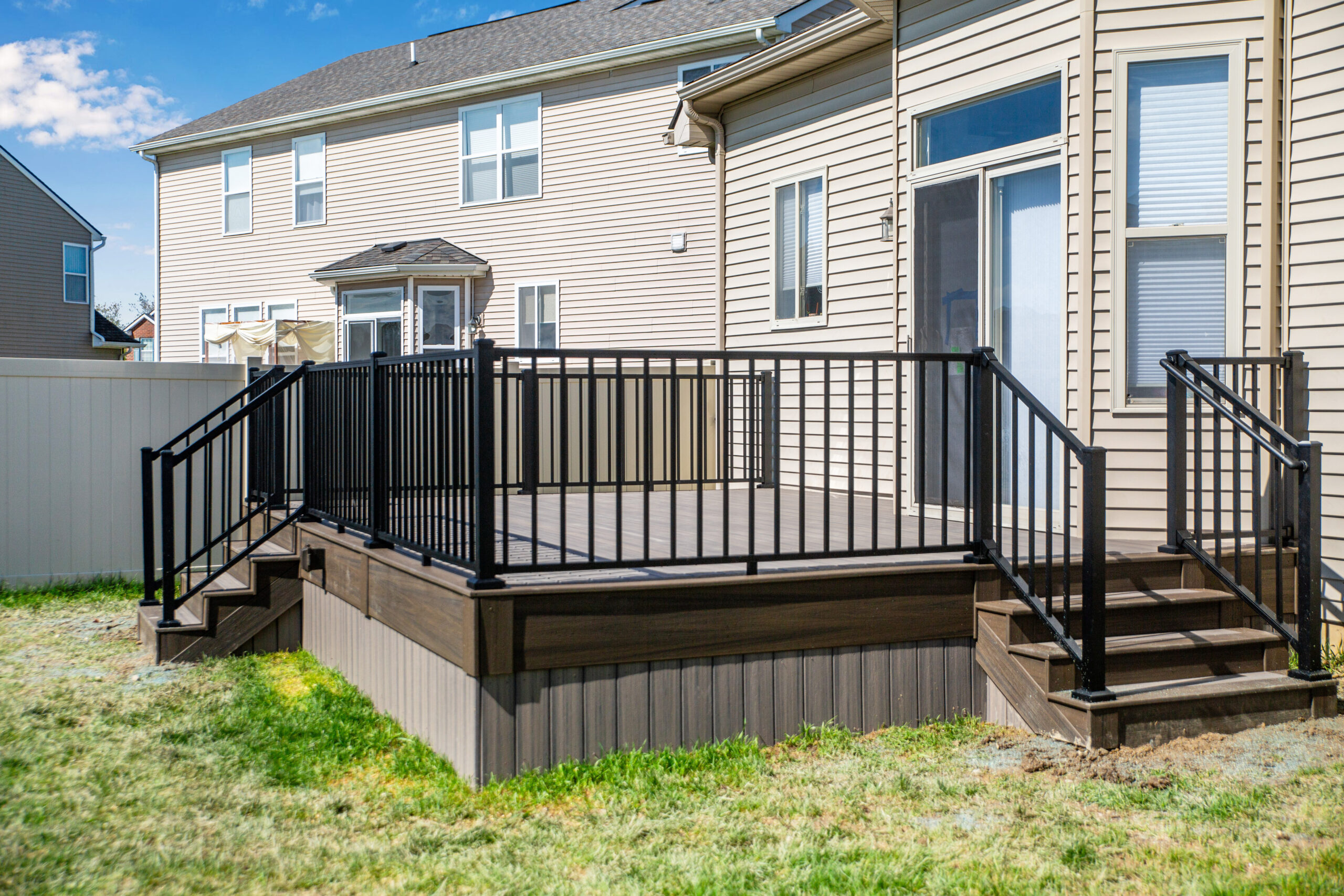
Wrap-Around Decks
These extend along two or more sides of your house. You get multiple ways to access the outdoors and can follow the sun throughout the day. They work well if you have a large yard or nice views from different angles.
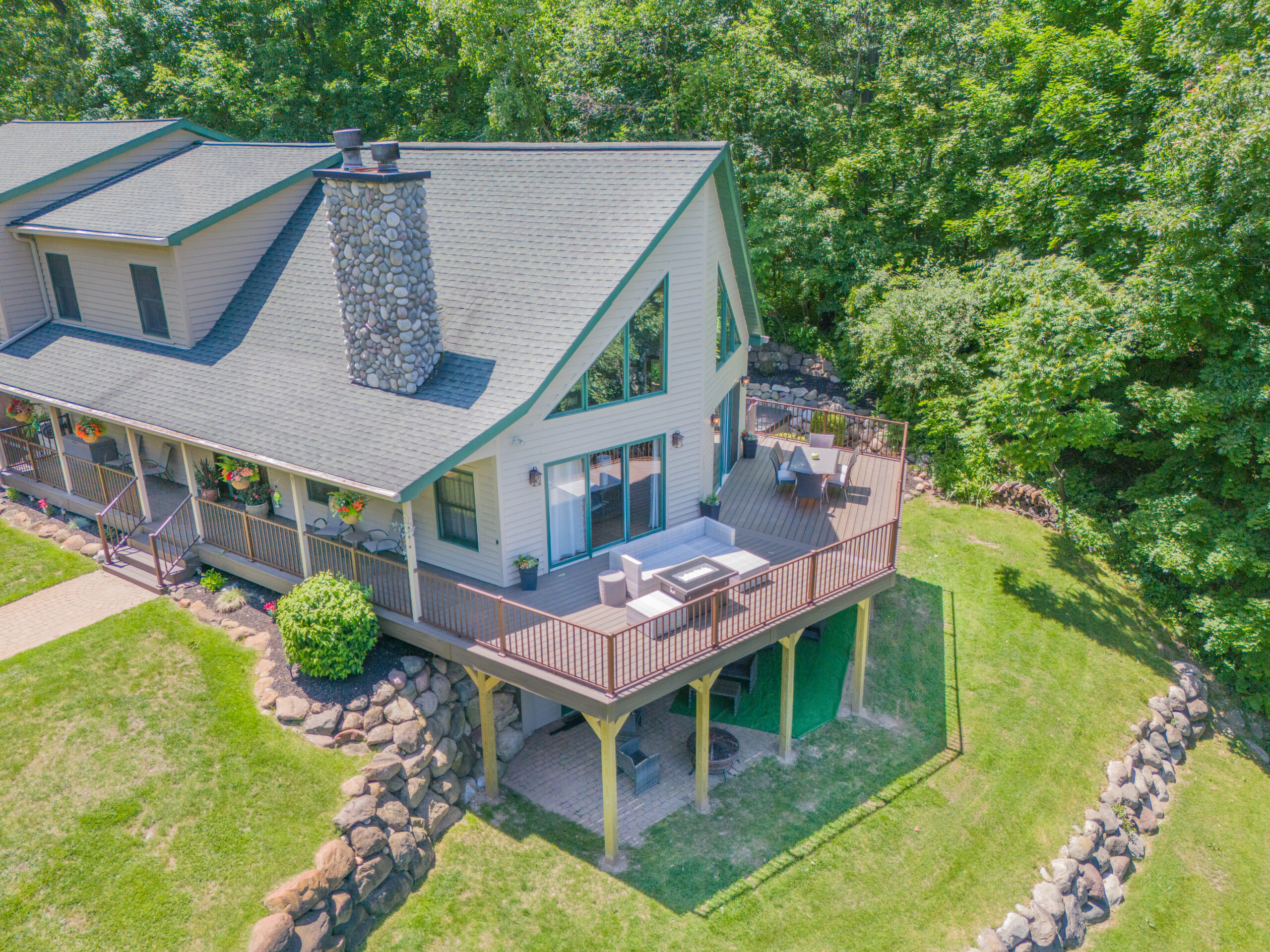
Multi-Level Decks
Great for sloped lots, which you’ll find plenty of in Southeast Michigan. You can create separate zones—one for dining, another for lounging. They add visual interest and make better use of challenging terrain.
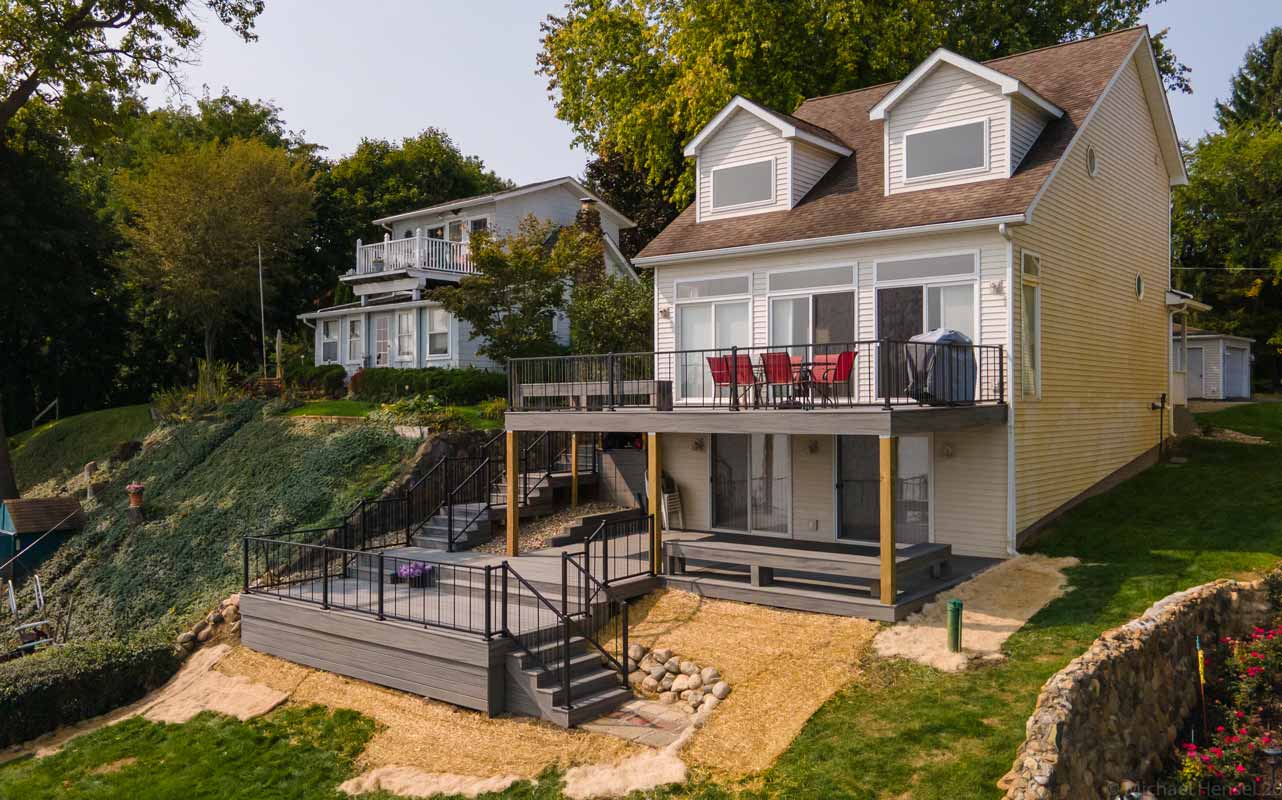
Covered and Screened-In Decks
These protect you from rain, snow, and mosquitoes. You can use them more months of the year, which matters when winter lasts half the year in Michigan. The coverage also protects your furniture and the deck itself.

Entertainment-Focused Decks
Think built-in kitchens, firepits, speakers, and lighting. These decks turn your backyard into party central. During Michigan’s short summers, having everything set up makes you more likely to actually use the space.
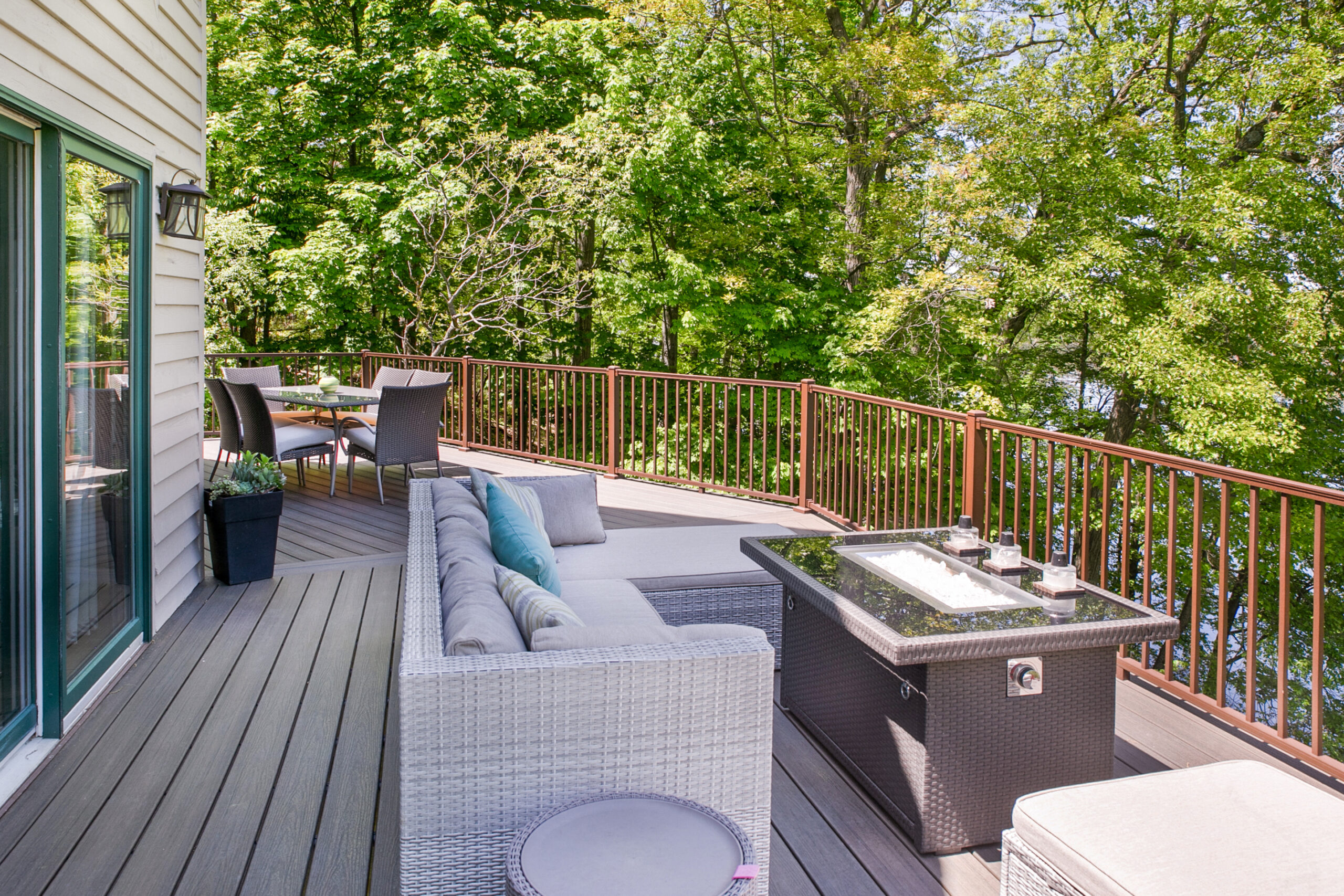
Waterfront or Lakeside Decks
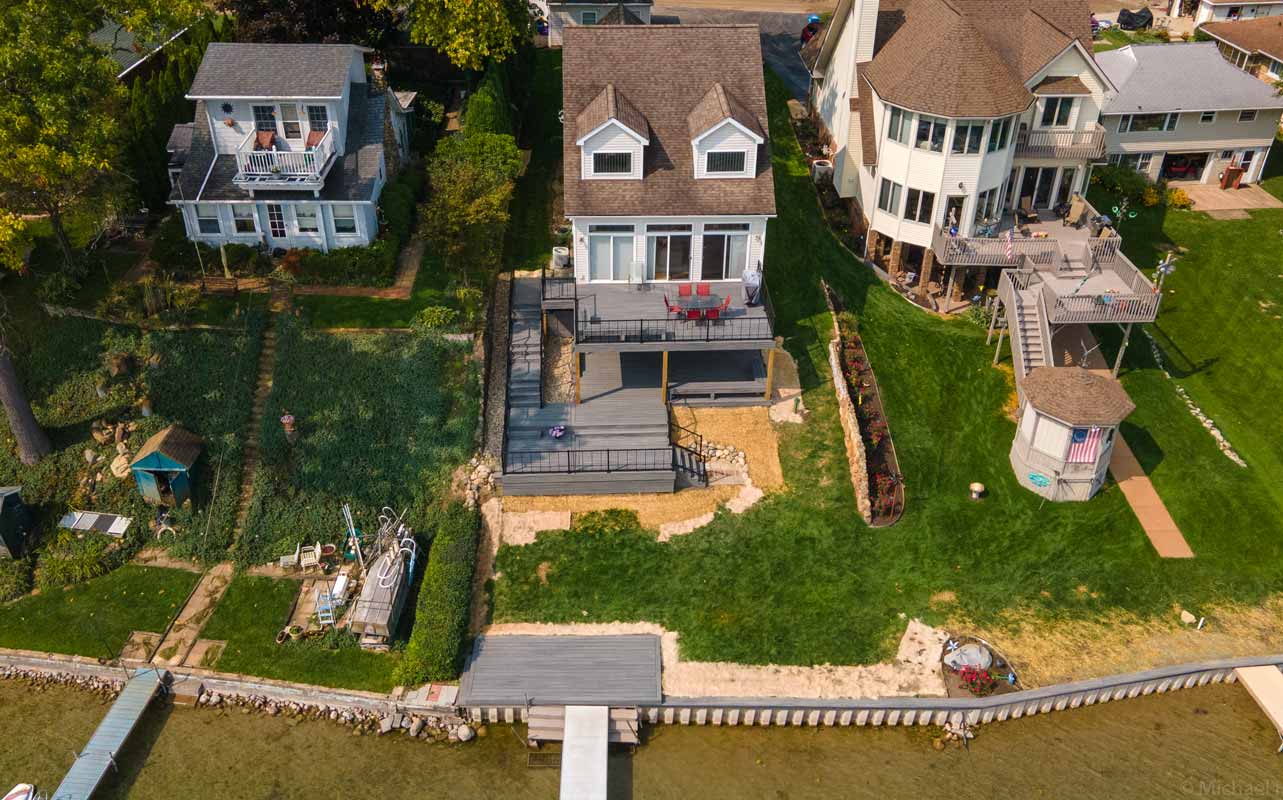
Designed for homes near Michigan’s lakes. They use materials that handle extra moisture and feature lower railings to preserve water views. The goal is blending with the natural shoreline rather than fighting it.
Key Trends and Considerations in 2025
Low-Maintenance, Sustainable Materials
More homeowners choose eco-friendly options like Trex or TimberTech. These materials use recycled content and last longer, which reduces waste. They also need less maintenance—important when you’d rather enjoy your deck than work on it.
Seamless Indoor-Outdoor Flow
People want their decks to feel connected to their homes. Bi-level designs, sliding glass doors, and matching flooring materials blur the line between inside and outside. This works especially well when renovating older Michigan homes.
Bold Colors and Mixed Materials
Deck design got more adventurous. You’ll see brighter colors, glass railings, and aluminum accents. These elements add personality while providing durability and safety—crucial for elevated decks.
Privacy Features and Add-ons
Pergolas, privacy screens, and built-in storage make decks more functional. In suburban neighborhoods where houses sit close together, these features help create a private outdoor retreat.
Common Deck Materials for Southeast Michigan

Pressure-Treated Wood
This is the cheapest option. The wood gets treated to fight rot and bugs, which helps in Michigan’s damp climate. But you’ll spend time maintaining it. Expect to seal, stain, or paint regularly to prevent warping and mold. If you don’t mind the upkeep and want to keep costs down, pressure-treated wood works.
Cedar
Cedar resists decay and insects naturally. It looks good and feels cooler under your feet than synthetic materials. You’ll still need to seal it annually to keep it looking sharp and lasting long. Cedar sits in the middle—more expensive than pressure-treated but less than the premium options.
Composite Decking
Brands like Trex and TimberTech make decking from recycled plastics and wood fibers. Some use rice hulls instead. This stuff handles Michigan’s wet climate well. It won’t rot, fade much, or need constant attention. You get lots of color choices too. The upfront cost is higher, but you save time and money on maintenance.
PVC Decking
This is 100% plastic with no wood at all. That makes it incredibly resistant to moisture, mold, and rot. Perfect for areas that see heavy snow or rain. It lasts a long time and needs almost no maintenance. The downside? It costs more upfront and might look less natural than wood or composite.
Aluminum and Specialty Materials
Less common but worth considering for specific situations. Aluminum won’t rust, splinter, or warp. It handles Michigan’s freeze-thaw cycles without complaint. These materials work well for modern designs or when you need maximum durability.
More Information On Deck Materials
For more details on decking materials check out our full guide: Best Deck Material for Ann Arbor Homes in 2025
Deck Permit Requirements in Ann Arbor
Permits are required for decks attached to the main structure. You’ll also need a permit for a deck 30″ or higher off the ground, or for any deck that is 200 sqft or above.
Check out our comprehensive deck permit guide:
Do I Need a Permit for a Deck?
For more information on deck permits in Ann Arbor, MI, you can check their portal.
Selecting the Best Deck for Your Home
Start with maintenance. How much time do you want to spend caring for your deck? Pressure-treated wood needs the most attention. Composite and PVC need the least.
Budget matters too, but think long-term. Cheaper materials often cost more over time when you factor in maintenance and replacement.
Consider your property layout. Sloped yards might need multi-level designs. Small spaces might benefit from creative vertical solutions. Think about sun exposure, views, and how the deck connects to your house.
Professional installation makes sense for most Michigan homeowners. Building codes, structural requirements, and weatherproofing details are complex. A contractor understands these requirements and local climate challenges.
Custom deck or traditional design? Custom decks are perfect for unique shaped areas and allow you to add more fetaures. Traditional decks cost less but lack the detail and uniqueness of a custom deck.
Making the Right Choice
Your deck needs to survive Michigan’s weather while matching how you live. If you host big gatherings, invest in entertainment features. If you want low maintenance, choose composite or PVC materials. If you’re on a tight budget, pressure-treated wood can work with proper care.
The best deck complements your home and lifestyle while standing up to snow, rain, and summer heat. Get these basics right, and you’ll have an outdoor space that adds value and brings you outside more often.
Deck Types and Styles FAQ
Q: Are there different types of decks?
A: Yes. Traditional backyard decks work for most homes. Wrap-around decks give you more space and access. Multi-level decks handle slopes well. Covered or screened-in decks protect from weather and bugs. Floating decks sit close to the ground. Each type fits different homes and lifestyles.
Q: What is a standard deck called?
A: Most people call it a traditional backyard deck. It’s usually rectangular or square, attached to your back door. Good for grilling, eating, or just sitting outside.
Q: What is a ground-level deck called?
A: A floating deck or platform deck. It sits close to the ground on blocks instead of deep footings, and usually doesn’t need railings or complex support.
Q: What is a modern deck?
A: Modern decks use sleek lines and mixed materials like wood with metal. The railings are often glass or cable for a clean look, and they may include built-in lighting or bold color choices to match contemporary homes.
Q: What is a floating deck?
A: A floating deck sits on the ground or blocks rather than being attached to your house. It doesn’t require deep footings like regular decks. Also called a platform deck or ground-level deck.
Materials and Durability
Q: Are there different types of decking?
A: Yes. Options include pressure-treated wood, cedar, composite brands like Trex or TimberTech, PVC, and aluminum. Each has different costs, looks, and maintenance needs.
Q: What type of deck is best?
A: Composite and PVC are best for low maintenance and longevity. Cedar and pressure-treated wood are better for a natural look if you don’t mind frequent upkeep.
Q: What kind of deck lasts the longest?
A: PVC and aluminum last the longest because moisture, rot, and bugs can’t damage them. Composite decking also lasts 25+ years with minimal maintenance.
Q: How long do decks last?
A:
- Pressure-treated wood: 10–15 years with regular care
- Cedar: 15–20 years
- Composite or PVC: 25–50+ years
- Aluminum: 40+ years
Q: What is the new type of decking called?
A: Capped composite decking—composite core with a PVC cap for added protection. Advanced PVC boards are also marketed as the latest low-maintenance option.
Q: What is the best form of decking?
A: Capped composite and PVC rank highest for durability, low maintenance, and style variety.
Q: What is the most maintenance-free deck?
A: PVC and aluminum need almost no maintenance. Composite decks require only occasional cleaning.
Construction and Permits
Q: What is the largest deck you can build without a permit?
A: Many Michigan towns allow decks under 200 square feet and less than 30 inches high without permits. Always confirm with your local building department.
Q: What permits are required to build a deck?
A: Most Michigan municipalities require a building permit for decks attached to homes or over 30 inches high. You may need a site plan and structural drawings.
Q: Who pays for a building permit?
A: The homeowner pays for the permit, but contractors often handle the paperwork and include the fee in their quote.
Q: Do I need a permit for a floating deck?
A: Many floating decks under 200 square feet and 30 inches high don’t require permits, but always check with local authorities.
Q: What is the code for building a deck?
A: Most areas follow the International Residential Code (IRC) with local adjustments. This covers joist spacing, railing height, footing depth, and safety requirements.
Q: How far apart should deck joists be?
A: Typically 16 inches apart for residential decks. Some composite decking may require 12-inch spacing for extra support.
Q: Can you build a deck without digging post holes?
A: Yes, for floating decks. You can use deck blocks or concrete pads instead of deep holes, as long as it meets local code.
Q: Can I build a deck directly on the ground?
A: Yes, but use a gravel or paver base under the deck blocks to improve drainage and prevent moisture problems.
Q: Do you need to put gravel under a deck?
A: Yes. Gravel improves drainage, prevents weeds, and reduces moisture-related damage.
Cost and Value
Q: Is a 12×12 deck too small?
A: A 12×12 deck (144 sq ft) works for a small seating area or grill setup, but may feel tight for dining or entertaining. A 16×20 layout works better for larger gatherings.
Q: What is a cheaper alternative to decking?
A: Gravel patios, concrete, or paver patios cost less but lack the elevation and traditional deck look.
Q: Is a floating deck cheaper than a regular deck?
A: Yes. Floating decks cost less due to fewer materials, no deep footings, and reduced labor.
Q: Do decks increase property value?
A: Yes. A well-designed, low-maintenance deck adds curb appeal and usable outdoor space, which buyers appreciate.
Q: Does a deck add to your taxes?
A: Yes. Decks are considered permanent home improvements and can raise your property value, potentially increasing property taxes.
Q: Does having a deck increase home insurance?
A: Possibly. Larger decks or those with added features like outdoor kitchens may increase liability risks and premiums.
References
Washtenaw County deck guidance
Recycled Content in Composite Decking Comparison – Trex vs. TimberTech