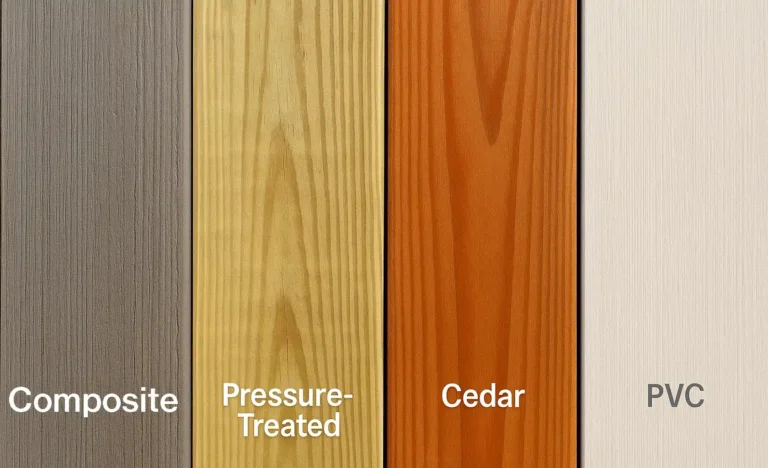
The Best Deck Material for Michigan: Composite vs. PVC vs. Wood (2027 Guide)
Michigan doesn’t go easy on decks. Humid summers, months of freezing, a freeze-thaw cycle every time March changes its mind, and snow that sits on your boards until April. The material you pick decides whether your deck shrugs that off for decades or starts splitting, cupping, and graying by year three.
This guide covers the four materials that matter for Southeast Michigan homes — composite, PVC, pressure-treated lumber, and cedar — with honest pros, cons, and what each one actually costs over the life of the deck. It’s written by the crew at SpaceStars Deck Builders, who’ve been building decks in Ann Arbor, Novi, Plymouth, Canton, South Lyon, West Bloomfield, and the surrounding communities long enough to see what holds up and what doesn’t.
If you’re short on time, the at-a-glance table below gives you the answer. If you want to understand why, keep reading.
The Short Answer
For most Southeast Michigan homeowners, capped composite is the best deck material. It handles freeze-thaw, doesn’t rot, skips the annual staining routine, and usually costs less than wood over 20 to 30 years. If your deck sits next to a pool, hot tub, or lake, step up to PVC. Choose wood only if you want the lowest upfront price or the real-wood look, and you’re genuinely okay spending weekends maintaining it.
| Material | Upfront cost | Maintenance | Typical lifespan | Handles Michigan winters | Best for |
|---|---|---|---|---|---|
| Capped composite | Medium-high | Rinse twice a year | 25–50 years | Excellent | Most homes, best long-term value |
| PVC | Highest | Rinse twice a year | 30–50+ years | Excellent | Pools, hot tubs, lakefront, full shade |
| Cedar | Medium | Stain or seal every 1–2 years | 15–20 years | Fair | The natural wood look |
| Pressure-treated pine | Lowest | Sand, stain, seal every 1–3 years | 10–20 years | Fair to poor | Tight budgets, short-term homes |
Why Michigan Is So Hard on Decks
A deck in San Diego and a deck in Ann Arbor are not living the same life. Here’s what yours is up against:
- Freeze-thaw cycles. Water soaks into wood, freezes, expands, and pries the fibers apart. Repeat that dozens of times a winter and you get checking, splitting, and loose fasteners.
- Humidity. Michigan summers are muggy, which means mold, mildew, and rot on anything that holds moisture.
- Snow and ice. Snow sitting on boards for weeks keeps the surface wet. Shoveling and ice melt add scratches and chemical exposure.
- Roughly 38 inches of precipitation a year, spread across every season, so your deck rarely gets a long dry spell.
- UV in summer. Sun fades stain, grays cedar, and bakes darker boards.
The takeaway: in this climate, how a material handles water matters more than almost anything else. Materials that absorb it eventually lose. Materials that shed it last.
Composite Decking: The Best All-Around Choice for Michigan
Composite boards blend wood fibers with recycled plastic. Modern capped composite adds a tough polymer shell around the core, and that shell is the whole ballgame in Michigan. It blocks moisture, UV fading, staining, mold, and mildew, so the board doesn’t swell, rot, or grow anything during humid summers or soggy springs.
SpaceStars installs composite from Trex, TimberTech, Deckorators, and Fiberon, so we can match the board to your budget and look instead of forcing one brand on every project.
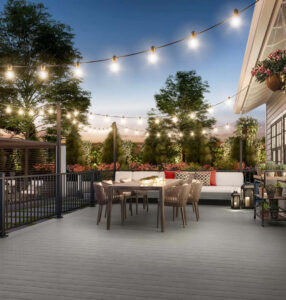
What you’ll love:
- No sanding, staining, or sealing. Ever. Rinse it in spring and fall and you’re done.
- Won’t rot, splinter, or attract insects.
- Realistic wood-grain textures in dozens of colors, and the color stays put.
- Manufacturer fade and stain warranties commonly run 25 to 50 years, depending on the product line.
- Made largely from recycled materials.
What to know going in:
- It costs more upfront than pressure-treated lumber.
- Dark colors get hot in full afternoon sun. Lighter shades and heat-mitigating lines help.
- It can scratch if you drag heavy furniture across it. Use pads and lift, don’t slide.
- Not every composite is capped. Uncapped, budget composite can absorb moisture and grow mold, so ask what you’re actually getting.
Bottom line: if you want a deck that looks good in year 20 without spending your Saturdays on it, composite is the answer for most Michigan homes.
PVC Decking: The Premium Pick for Water, Shade, and Pools
PVC boards are 100% synthetic, with no wood fiber at all. That means there’s nothing in the board for water to soak into or mold to feed on. If composite is weather-resistant, PVC is weather-indifferent.
TimberTech’s AZEK line is the best-known PVC option, and it’s one of the products SpaceStars installs.
What you’ll love:
- Essentially waterproof. Ideal around pools, hot tubs, docks, lakefront homes, and shady, damp yards where composite might struggle.
- Lighter than composite and highly resistant to mold, staining, and fading.
- Many lines run cooler underfoot than comparable composite.
- Long warranties, commonly up to 50 years on premium lines.
What to know going in:
- It’s the most expensive decking you can buy.
- PVC expands and contracts more with temperature swings. Installed correctly with the right gapping and fasteners, that’s a non-issue. Installed by someone guessing, it’s a problem.
- Some lower-end boards look more synthetic, though premium lines have closed that gap a lot.
Bottom line: if your deck lives near water or in heavy shade, PVC is worth the premium. For a typical sunny backyard, composite gets you most of the benefit for less.
Pressure-Treated Lumber: Cheapest Today, Not Cheapest Overall
Pressure-treated (PT) lumber is usually pine infused with preservatives to fight rot and insects. It’s the most affordable decking material and the one you’ll see stacked at every big-box store.
It also has a job almost every deck needs: PT lumber is the standard for deck framing — the posts, beams, and joists underneath — even when the surface is composite or PVC.
What you’ll like:
- Lowest upfront cost by a wide margin.
- Easy to find and easy to work with.
- The chemical treatment resists rot and termites.
What you’re signing up for:
- PT wood still absorbs water. Through Michigan freeze-thaw cycles it shrinks, swells, splits, cups, and checks.
- Plan to clean, sand, stain, and seal every one to three years. Skip it, and the deck goes gray and rough fast.
- Splinters, raised nails, and warped boards show up over time, especially on south-facing decks that bake all summer.
- Ten years of stain, sealer, and labor can quietly cost more than the composite upgrade would have.
Bottom line: PT makes sense if the budget is truly tight, you’re planning to move in a few years, or you actually enjoy deck maintenance (some people do, and we respect it).
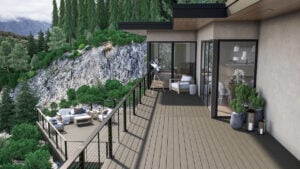
Cedar and Hardwoods: Beautiful, With Strings Attached
Cedar has warm color, gorgeous grain, and natural oils that resist rot and insects better than untreated softwoods. It’s the choice for homeowners who want real wood and nothing else.
The catch is that Michigan sun and moisture fade cedar to silvery gray within a year or two unless you stain or seal it. Most cedar decks need fresh stain every one to two years to keep their color. Cedar prices also swing with supply, and it’s softer than most people expect, so it dents and scratches.
Tropical hardwoods like ipe are extremely dense, very long-lasting, and stunning. They’re also expensive, heavy, need pre-drilling, and require regular oiling to keep their color instead of weathering gray.
Bottom line: choose cedar or hardwood because you love the look and you’re committed to the upkeep. Don’t choose it to save money, because over 20 years it usually doesn’t.
What Each Material Really Costs Over 30 Years
The sticker price is the least interesting number in this decision. What matters is total cost of ownership: what you pay to install it, plus everything you’ll spend keeping it alive, plus whether you’ll be paying to replace the surface before you’re done with the house.
| Material | Upfront cost | Stain/seal cycles in 30 years | Surface replacements in 30 years | 30-year total cost |
|---|---|---|---|---|
| Pressure-treated pine | Lowest | About 10–15 | Likely 1–2 | High |
| Cedar | Medium | About 15–20 | Likely 1 | High |
| Capped composite | Medium-high | None | Usually none | Medium |
| PVC | Highest | None | Usually none | Medium-high |
Here’s the pattern: wood wins on day one and loses by year ten. Every stain cycle is materials, labor (yours or someone else’s), and a weekend. And because wood decking often wears out in under 20 years in Michigan, many homeowners end up paying to resurface right when they’d hoped to be done.
Composite and PVC flip that. You pay more once, then the spending mostly stops. Over a few decades, the “expensive” option is frequently the cheaper one.
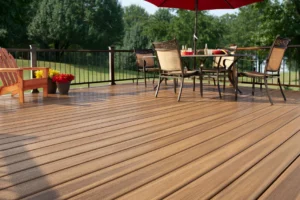
Want real numbers for your yard? Every project is different (size, height, stairs, railings, access), so the most accurate answer is a free design consultation, where we can price options side by side.
The Board Is Only Half the Deck
Here’s what most material guides skip: a 50-year board on a sloppy frame is a 10-year deck. The surface gets the attention, but what’s underneath decides how long the whole thing lasts.
- Footings below the frost line. In Michigan, footings need to go deep enough (typically around 42 inches) that frost heave can’t push them around. Shallow footings are how decks end up out of level by year three.
- Joist spacing that matches the board. Composite and PVC have specific span requirements, often tighter than wood. Get it wrong and boards sag or bounce, and it can affect your manufacturer warranty.
- Proper gapping and fasteners. Synthetic boards expand and contract with temperature. Hidden fastener systems built for the board keep the surface clean and stable.
- Joist protection and drainage. Protecting the tops of joists and keeping water moving off and away from the frame extends the life of the structure. Underdeck systems like Haven can also turn the space below a second-story deck into a dry patio.
- Permits and inspections. Most attached or elevated decks in Michigan need a permit. See our guide: Do I need a permit for a deck?
That’s why SpaceStars backs every build with a 30-year workmanship warranty. The manufacturer warranty covers the boards. Our warranty covers how they were put together. You want both, and you should be skeptical of any builder who only talks about the first one.
So Which Material Should You Choose?
Match the material to how you’ll actually live with the deck:
- You want it to look great for decades with almost no upkeep: capped composite.
- Your deck is by a pool, hot tub, or lake, or sits in heavy shade: PVC.
- You plan to stay in the home 10+ years: composite or PVC. The long-term math is on your side.
- You love real wood and don’t mind staining every year or two: cedar.
- You need the lowest possible price today and may move soon: pressure-treated lumber.
Three quick questions settle most decisions: How long will you live here? How much time do you want to spend maintaining the deck? And what are you comfortable spending now versus over the next 20 years?
Frequently Asked Questions
What is the best deck material for Michigan winters?
Capped composite and PVC. Neither absorbs water, so freeze-thaw cycles don’t crack, split, or warp them the way they do wood.
Is composite decking worth the money?
For most homeowners staying more than a few years, yes. It costs more upfront, but with no staining or sealing and a lifespan of 25 to 50 years, it often costs less than wood over time.
Which is better, composite or PVC?
Composite is denser, more rigid, and usually less expensive, with a very natural look. PVC is lighter and even more moisture-resistant, which makes it better near pools, hot tubs, and water. For a typical sunny backyard, composite is usually the better value.
What are the downsides of composite decking?
It costs more than wood upfront, dark colors get hot in direct sun, and it can scratch if heavy furniture is dragged across it. Choosing a capped board and a lighter color solves most of this.
Does composite decking get slippery?
Quality composite has textured, slip-resistant surfaces, but any deck can get slick when wet, icy, or dirty. Keep it clean and use a composite-safe ice melt in winter.
Can you stain or paint composite decking?
We don’t recommend it. Staining or painting composite can void the manufacturer warranty and usually looks uneven. Pick a color you love from the start.
How long does a pressure-treated deck last in Michigan?
Typically 10 to 20 years for the surface, depending on how consistently it’s sanded, stained, and sealed. Neglected PT decks can show rot in under a decade.
How often do you need to seal a wood deck?
Pressure-treated wood every one to three years. Cedar every one to two years to keep its color.
What are the different grades of Trex?
Trex sells three main lines: Enhance (entry level), Select (mid-range), and Transcend (premium), with warranty length and appearance improving as you move up.
What are alternatives to Trex?
TimberTech, Deckorators, and Fiberon all make excellent composite and PVC options. SpaceStars installs all four, so we can compare them side by side for your project.
What is the longest-lasting deck material?
PVC and dense tropical hardwoods like ipe can both last 50 years or more. PVC does it with far less maintenance.
How do I clean a composite deck?
Warm water, a mild dish soap, and a soft-bristle brush handle routine cleaning. Rinse in spring and fall, clear leaves and debris so mold has nothing to feed on, and avoid harsh chemicals.
See the Materials in Person Before You Decide
Photos and spec sheets only get you so far. During a free design consultation, SpaceStars brings real samples from Trex, TimberTech, Deckorators, and Fiberon, walks your yard, and prices your top options side by side so you can see exactly what each choice costs now and over time.
Every deck we build is backed by our 30-year workmanship warranty, on top of the manufacturer’s material warranty.
Schedule your free design consultation or call (734) 896-5667. You can also browse finished projects in our gallery or see what homeowners say in our reviews.