
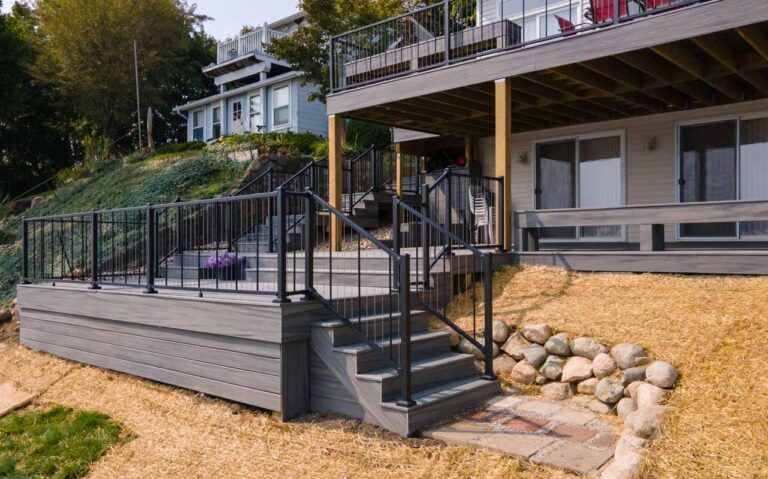
Everything You Need To Know About Trex Decking
Listen – they don’t call us SpaceStars for nothing. From the first plans to the final touches of your project, our priority is to create a seamless experience that leaves you feeling excited about your new outdoor living space. How do we achieve this? Well, we boast stellar service, excellent contractors, and the highest quality materials. That’s why we love working with Trex Composite Decking materials to give our clients a deck that’ll outlast rain, heat, and anything else Michigan throws at you – which is a lot. This blog provides a complete guide to Trex Decking and answers all your questions, ensuring you feel confident in choosing the right material for your next project.
What is Trex Decking?
Trex is a recycled composite that comes in a variety of colors, grains, and performance capabilities to fit your home’s aesthetic and technical needs. Composite combines recycled wood and plastic to create a durable, low-maintenance, and pest-resistant material, making it an excellent alternative to traditional wood.
One of the coolest things about Trex Decking is that it’s made from 95% recycled materials. Our team cares about reducing environmental impact while providing a stylish and functional outdoor living solution, which makes Trex a clear and excellent choice for our projects.
Composite or wood
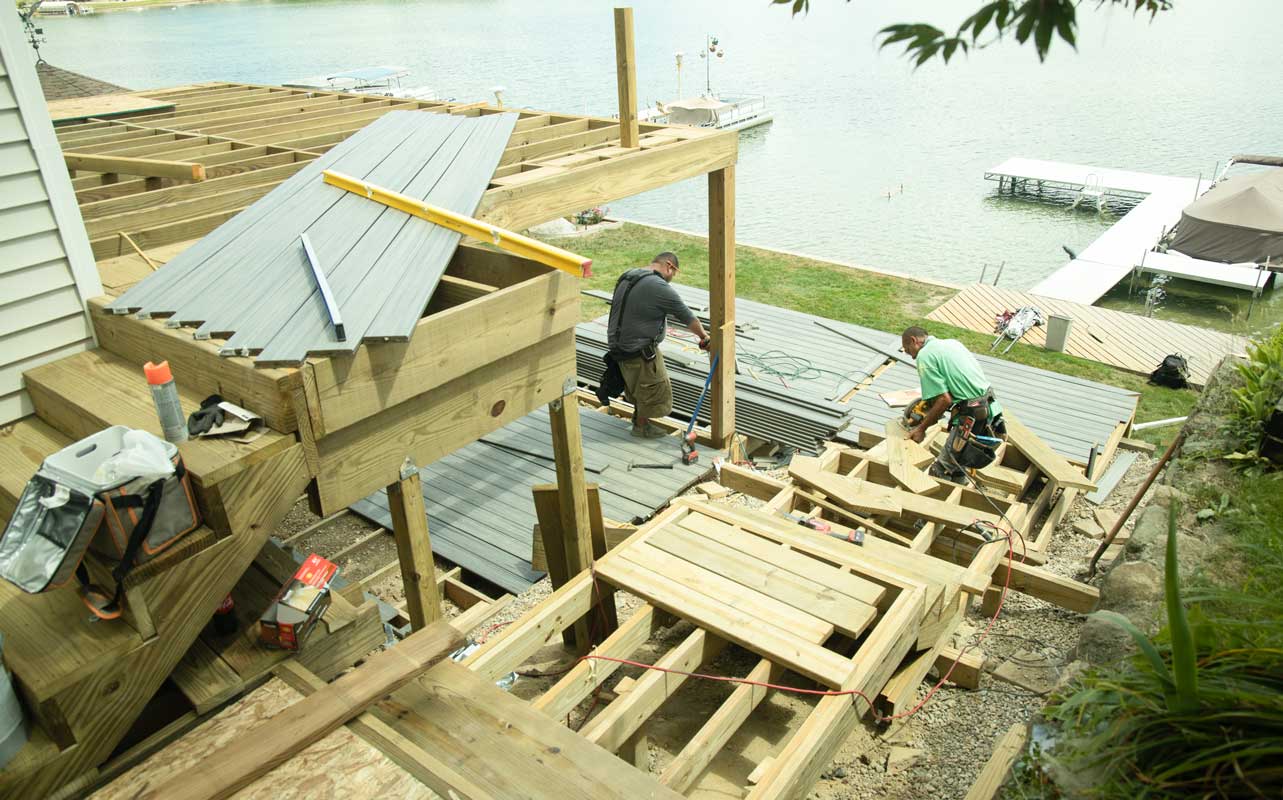
Both wood and composite offer unique benefits and drawbacks, and careful consideration is important for any project. To learn more about wood decking and our offerings, you can check out our wood decking guide here or look at our gallery here.
| Composite | Wood |
| Lower maintenance | Requires staining, painting, and sealing |
| Pest resistant | Susceptible to pest infection |
| Higher cost | Lower cost |
| Emulates wood but is not identical | Natural wood look and feel |
| Stands up to the elements | More susceptible to weather damage |
Both natural wood and composite decking are visually appealing options that can offer beautiful and long lasting results, but composites like Trex take the cake in terms of maintenance, longevity, and reliability.
Why we use Trex Decking
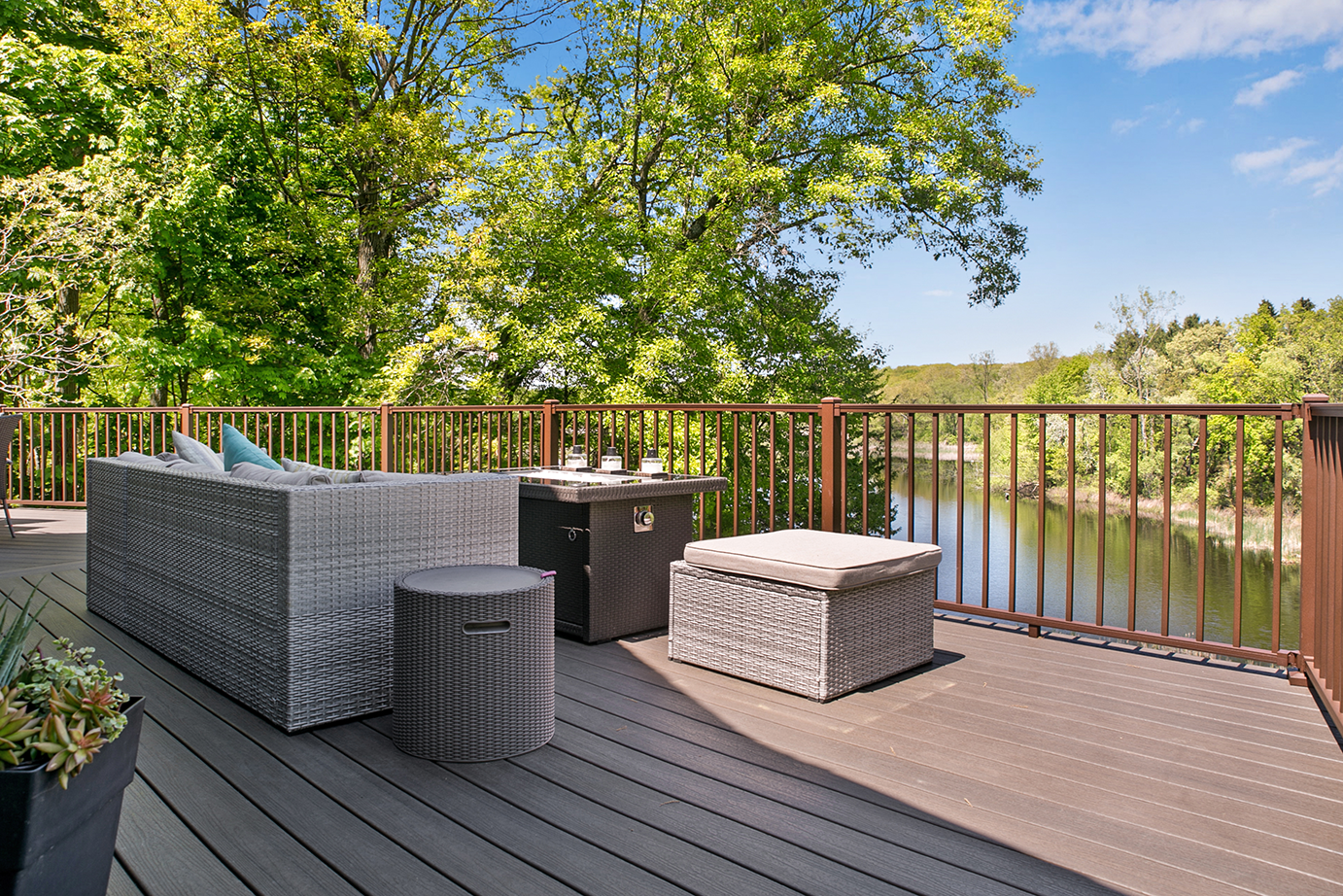
1. Eco-friendly
Environmental impact is one of the top considerations we make during any project. If you’re going to enjoy the great outdoors might as well support it as well! Made using 95% recycled material, Trex uses a mix of reclaimed wood and recycled plastic film to create a composite that removes harmful materials from the environment and reduces the frequency that your deck needs to be repaired and replaced.
Trex also uses reclaimed sawdust as part of their blend. Trex has a commitment to consumers that trees are never cut down to make their composite decking. Sawdust is the unavoidable byproduct of any wood project, so finding new uses for it is a great way to reduce environmental impact.
For the plastic component, Trex uses recycled plastic film from sources including grocery bags, plastic wrapping, dry cleaning bags, and more. With plastic clogging landfills and filling our oceans, committing to repurposing such an abundant material makes a big difference.
Finally, Trex is committed to a sustainable supply chain that utilizes approximately 90% of materials sourced from the United States. This minimizes the distance materials have to travel and thus reduces carbon emissions. By conducting supply chain assessments and in person facility reviews, Trex does its due diligence in keeping up its commitment to the environment.
2. Durability
Investing in a structure that stands up to the test of time – and the southeast Michigan weather – is important to any home renovation project. Composite, and especially Trex, is designed to stand up to extreme conditions and extenuating incidents.
One of the major factors that influences composites durability is its resistance to moisture. Regular wood decking is far more apt to absorb moisture, making it susceptible to rot, mildew growth, and discoloration. Composite tackles this with its unique blend of repurposed wood and plastic, which creates an especially tough material.
3. All weather resistant
I don’t need to tell you about the tumultuous weather in southeast Michigan. Our beautiful snowy winters and hot luscious summers test your deck to its absolute limit, and it should be able to stand proud and strong no matter what the weather throws at it. Composite is designed to take a beating and still look beautiful, making it an excellent choice for all weather environments.
When we think of bad weather, our minds often jump to extreme rain, snow, or humidity. UV exposure also damages a deck surface over time. Not only does UV exposure diminish the color of a traditional wood deck, but it can also dry it out over time. This eventually leads to splitting, cracking, and splintering. And once winter rolls around your deck is even more susceptible to damage.
We love composite for Michigan homes because it’s specially designed to be resistant to many of the weather related problems that traditional wood faces. Trex decking has a specially designed shell that protects it from the elements. Trex’s shell is different from other composites because it doesn’t just lay on top of the material – it fuses with it. This provides better protection against the weather and increased longevity.
4. Easy cleaning and upkeep
One of the things you’ll love most about Trex Decking is its easy maintenance and upkeep. Your time is valuable, and it’s far better spent enjoying your outdoor living space than meticulously scrubbing it. Because of its natural weather resistance and anti-absorption properties, Trex is far easier to clean than traditional wood decking. Below is a rubric of different messes your Trex deck might encounter and the best way to clean it.
| Dirt and debris Oil, grease, and food | While Trex stands up great to mold and mildew, pollen accumulation on the surface of your deck can eventually lead to problems as mold and mildew feed on pollen film. It’s easy to clean, though. Soap, water, a soft scrub brush, and a hose does the trick perfectly. |
| Hard water staining | Michigan has generally hard water, meaning at some point your deck may experience some calcium buildup. Thankfully, the solution to this is one that you can find in your pantry. A bit of white vinegar will go a long way when it comes to cleaning hard water stains. Spray the area with some white vinegar, let sit for 15 to 20 minutes and then wipe away with a wet cloth. Trex suggests using filtered water when washing away the vinegar mix as not to end up back in the same place with the hard water. |
| Tannins | Tannins are a compound found in plants that have the ability to stain materials that they touch. Tannins are one of the things that make lakes and rivers have a brownish hue. While tannins may be good for our rivers, they aren’t so nice for our decks. Trex suggests using a deck brightener that contains Oxalic acid to safely remove the discoloration. |
| Ice and snow | One of the great benefits of Trex over wood decks for southeast Michigan homes is its ability to stand up to rock salt during the winter. If your deck is slick with ice after shoveling, use rock salt as normal to melt it down. But it is incredibly important to wash the remaining rock salt off of your deck once the ice is melted. |
| Mold and mildew | While Trex stands up great to mold and mildew, pollen accumulation on the surface of your deck can eventually lead to problems as mold and mildew feed on pollen film. It’s easy to clean, though. Soap, water, a soft scrub brush, and a hose do the trick perfectly. |
Trex Decking FAQ
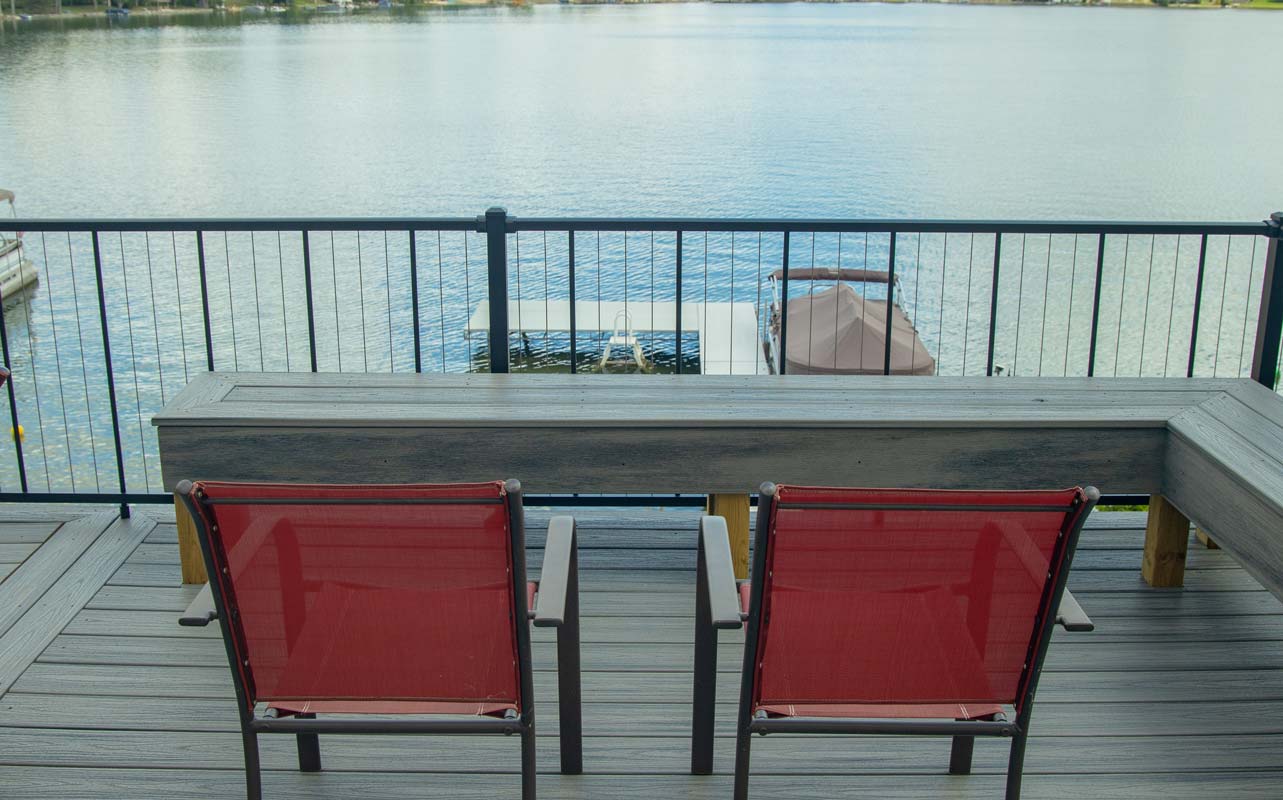
When it comes to picking out the material for your deck, you should feel secure in your choice, and that means asking a lot of questions. Below we’ve compiled a list of some of the questions we hear most frequently when it comes to Trex Decking so you can feel informed and ready for your next project.
🧱 General Product Questions
Q: What is Trex decking?
A premium composite decking made from recycled wood and plastic, known for durability, low maintenance, and long warranties.
Q: Is Trex decking worth it?
A: Yes. While the initial cost is higher than wood, Trex’s low maintenance and long lifespan (25–50 years) make it a smart long-term investment.
Q: What are the downsides of Trex decking?
A: Trex can be hotter than wood in direct sunlight, is heavier, and more expensive upfront. Early-generation boards had durability issues, but modern lines are significantly improved.
👉 Read more about common Trex issues here.
Q: What are the three grades of Trex decking?
A: Trex offers:
- Enhance (budget-friendly)
- Select (mid-tier)
- Transcend (premium performance and aesthetics)
Q: Which Trex line is best?
A: Trex Transcend is the top-tier line, offering the highest durability, color retention, and fade resistance.
🔥 Heat & Comfort
Q: Does Trex decking get hot in the sun?
A: Yes, especially darker colors. Trex is hotter than wood, but proper shading, lighter colors, and ventilation can help.
Q: Is Trex slippery when wet?
A: Trex is slip-resistant under most conditions but can become slick with algae or mold buildup. Regular cleaning helps reduce this.
Q: How do you keep Trex decking cool?
A: Use lighter colors, install under partial shade, or use outdoor rugs and canopies.
Q: Is there a Trex deck that doesn’t get hot?
A: Lighter-colored boards from the Trex Transcend line stay cooler than dark options, but no composite deck is entirely “cool” in full sun.
Q: Is a black deck too hot?
A: Generally yes, especially in full sun. Opt for lighter tones if heat is a concern.
Q: What is the best decking to stay cool?
A: Light-colored PVC or capped composites (like Trex Transcend in white or gray tones) are among the coolest options.
🧼 Cleaning & Maintenance
Q: Can I pressure wash my Trex deck?
A: Yes — up to 3100 PSI, and keep the nozzle at least 8 inches away. Higher pressure or close contact can damage boards.
Q: What ruins composite decking?
A: Using harsh cleaners, metal shovels, or not cleaning mildew can degrade the deck over time.
Q: Does mold grow on composite decking?
A: Mold can appear on surface dirt or pollen, but doesn’t penetrate the material. Routine cleaning prevents buildup.
Q: Can I use Dawn dish soap on Trex decking?
A: Yes! Mild soaps like Dawn are safe for regular Trex cleaning.
Q: How to rejuvenate old Trex decking?
A: Clean with a composite-safe cleaner. For older generation boards, a composite brightener may help restore color.
🔩 Installation & Hardware
Q: Do you leave gaps between Trex decking?
A: Yes. Trex must be installed with gaps to allow for expansion and drainage.
👉 Learn more about Trex installation gaps here.
Q: Can Trex be screwed down or butted together?
A: Trex recommends hidden fasteners. Butting boards is possible, but gaps should still be considered.
👉 Read more about installation best practices.
Q: Do Trex fasteners go on every joist?
A: Yes. Fasteners should align with each joist for secure support.
Q: Can I put a rug on Trex decking?
A: Yes, but use breathable outdoor rugs to avoid moisture trapping.
Q: What do you put between a house and a deck?
A: A flashing system or deck-to-wall spacer to prevent water intrusion.
🐾 Pets & Safety
Q: What is the best deck material for dogs?
A: Trex is great for pets—no splinters, cooler tones available, and easy cleanup.
🏗️ Structural & Load Questions
Q: Can my Trex deck support a hot tub?
A: Possibly. Trex boards are strong, but the frame beneath must be designed for heavy loads.
👉 Read more about Trex and hot tubs here.
Q: Why does my deck shake, bounce, or shock me?
A: These are often signs of poor framing, insufficient footings, or static buildup. A contractor should evaluate the deck.
Q: Can a summer house go on decking?
A: Yes, if the substructure is reinforced. Proper support and spacing are critical.
Q: What’s the best base for a summer house?
A: Pressure-treated wood or concrete pads are best. Composite decking can work if engineered for the load.
📏 Sizing, Pricing & Value
Q: What is the most efficient deck size?
A: 12×16 and 16×20 are common for usability and cost-efficiency. Maximize by using standard board lengths.
Q: What is the most expensive decking?
A: Premium capped composite or PVC options like Trex Transcend or TimberTech AZEK.
Q: What is the least expensive decking?
A: Pressure-treated lumber is cheapest; among composites, Trex Enhance is the most budget-friendly.
Q: Does Trex ever go on sale?
A: Occasionally at big-box retailers like Lowe’s, Costco, and Home Depot—usually end of season or bulk buys.
Q: How to save money on Trex decking?
A: Choose standard colors, install off-season, or mix product lines (e.g. Enhance basics with Select railings).
🧪 Brand Comparisons
Q: What decking is better than Trex?
A: “Better” is subjective. TimberTech and Fiberon offer similar or better performance in certain categories. Trex leads in warranty and availability.
Q: What is the best composite decking?
A: Trex Transcend consistently ranks high. According to Consumer Reports, it scores well in durability and aesthetics.
Q: Which is better — Trex or UltraDeck?
A: Trex offers more advanced material tech and longer warranties. UltraDeck is more budget-friendly.
Q: What’s better than composite decking?
A: PVC decking (e.g., AZEK) resists moisture better but costs more.
Q: What is the next best thing to Trex decking?
A: TimberTech PRO or Fiberon Concordia are strong contenders.
Q: Does Lowe’s or Home Depot sell Trex decking?
A: Yes, both retailers carry Trex. Costco also offers seasonal bundles.
🧱 Lifespan & Durability
Q: How long will a Trex deck last?
A: Trex decking lasts 25–50 years depending on the line.
👉 Trex warranty details here.
Q: What type of decking lasts the longest?
A: High-end PVC (like AZEK) lasts longest. Among composites, Trex Transcend has one of the best lifespans.
Q: How often should you replace your deck?
A: Wood decks: ~10–15 years. Trex: 25–50 years, depending on usage and maintenance.
Q: How to tell if decking is bad?
A: Look for warping, cupping, mold, softness underfoot, or loose boards.
Q: Why is my Trex decking cupping or warping?
A: Likely improper installation or poor ventilation.
👉 Read more on Trex warping here.
At SpaceStars we love working with Trex decking for its durability, looks, eco-friendly nature, and high quality. There are a lot of considerations when taking on a new decking project, but we’re excited to help you every step of the way. Contact Us today, and one of our experienced team members will reach out to help you get started.